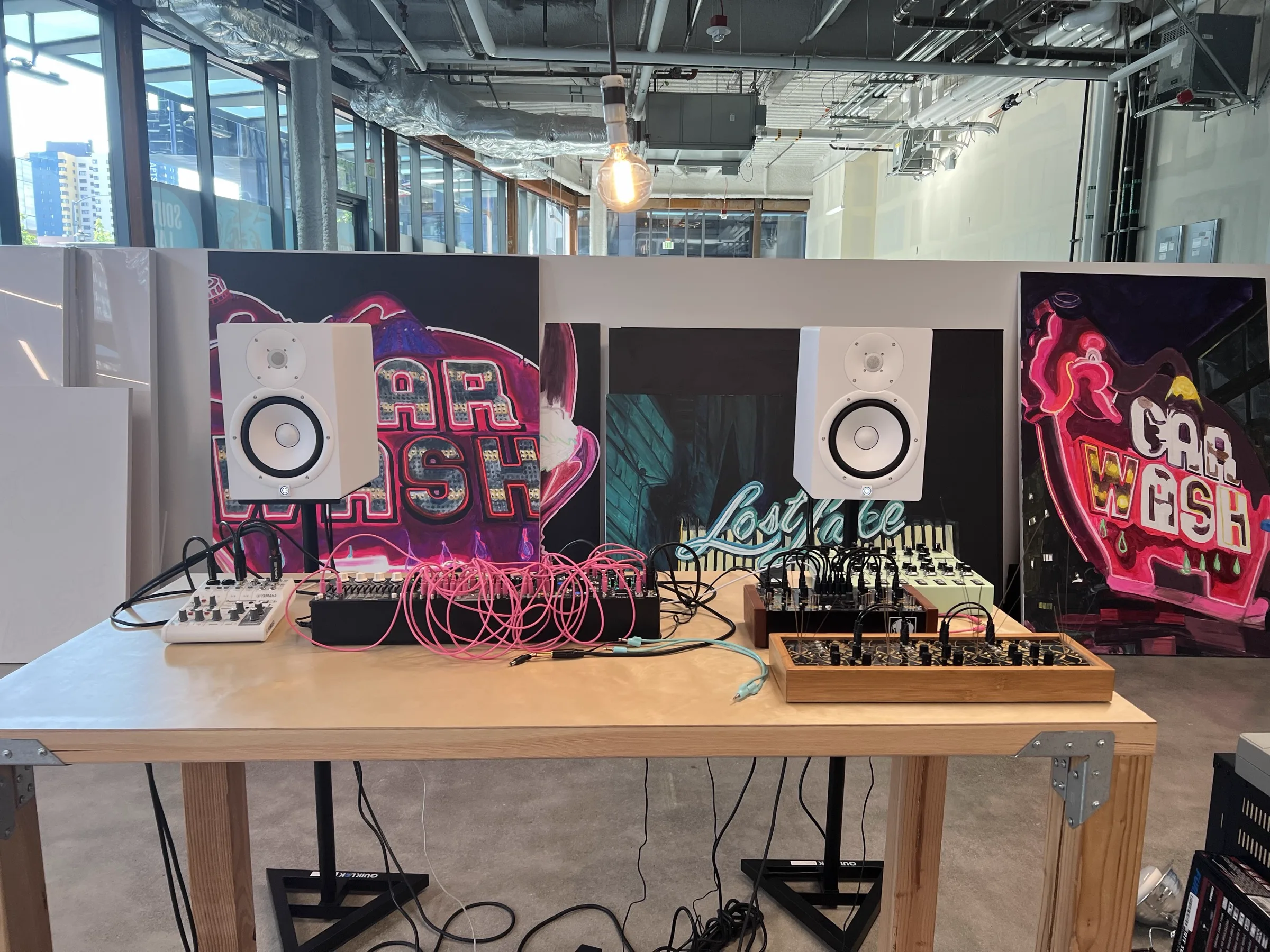
South Lake Union · Seattle · 2023
Ground Floor
Studio.
Scroll
Through 2023, the ground floor of an Amazon building in South Lake Union was a working artist's studio and fabrication shop — open every weekday, run by Seattle artist Joshua Borsman.
The program was a pilot artist residency built with Amazon's Global Real Estate and Facilities (GREF) team — an experiment in putting an artist's bench next door to the people who design and operate Amazon's physical world.
The premise was simple. Take an empty shell. Build a real fabrication studio inside it. Open the doors. Make paintings, sculpture, machined parts, robotics, synths and digital work — in plain view of the people walking past. See what happens to a workplace when there's a CNC mill running in the next room.
Engineers stopped in between meetings. Facilities staff cut through with a coffee. Visitors leaned on the bench and asked what the patch cables did. None of it was a program with a curriculum — just a workshop on the way to the elevator, with the doors open.
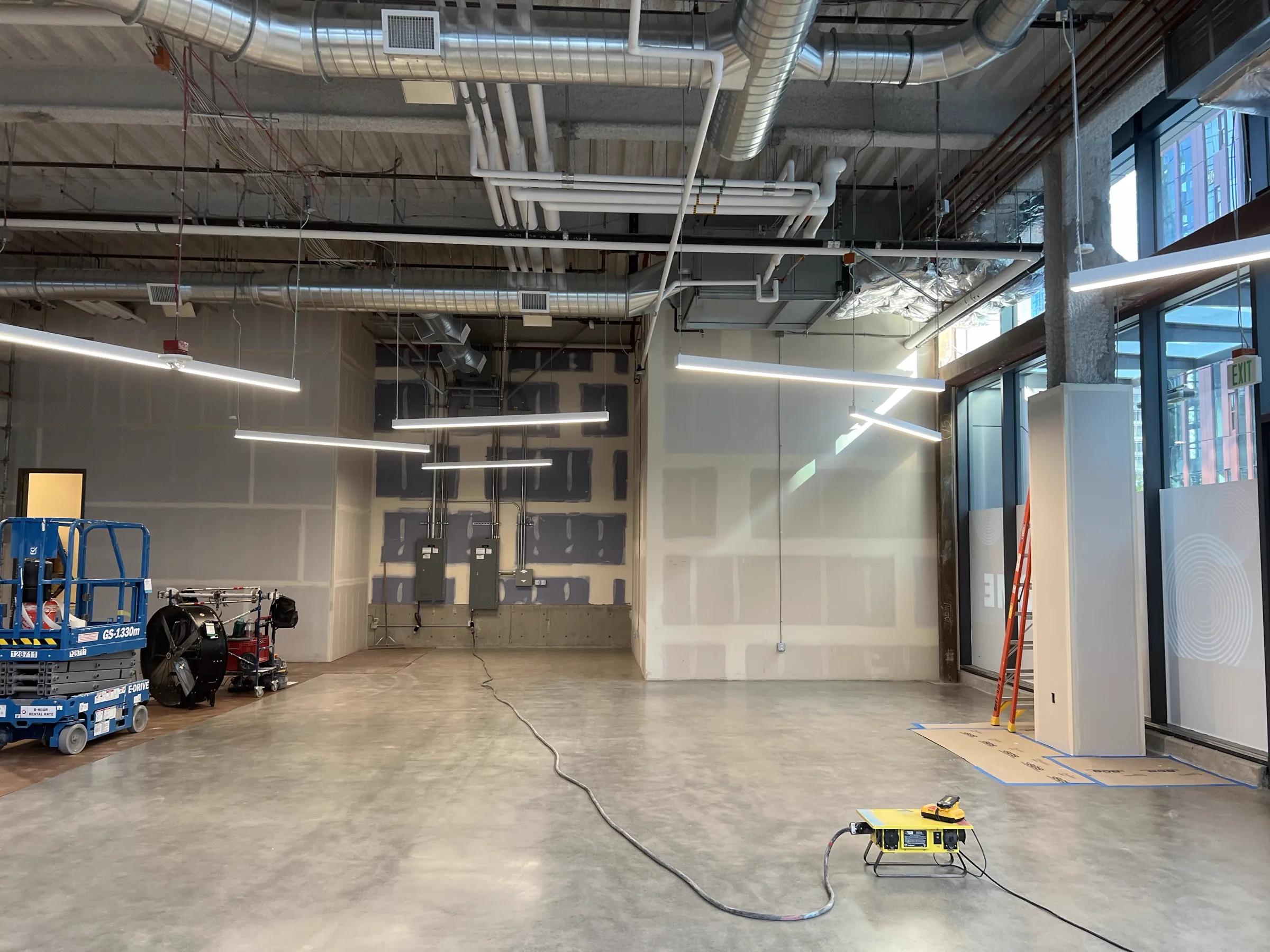
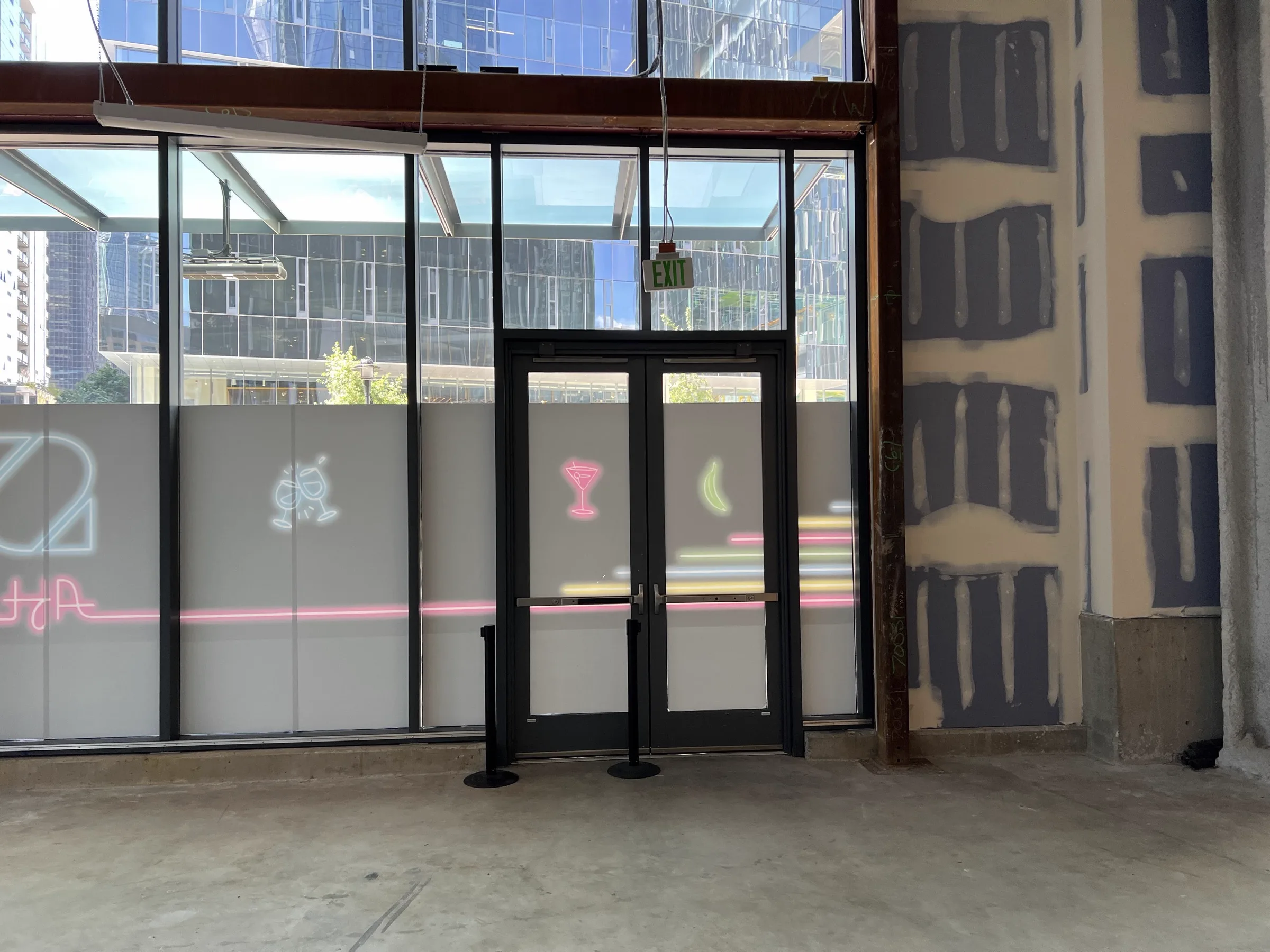
October 2022. Concrete floor, exposed ductwork, half-built drywall. Six skylights from the mezzanine above.
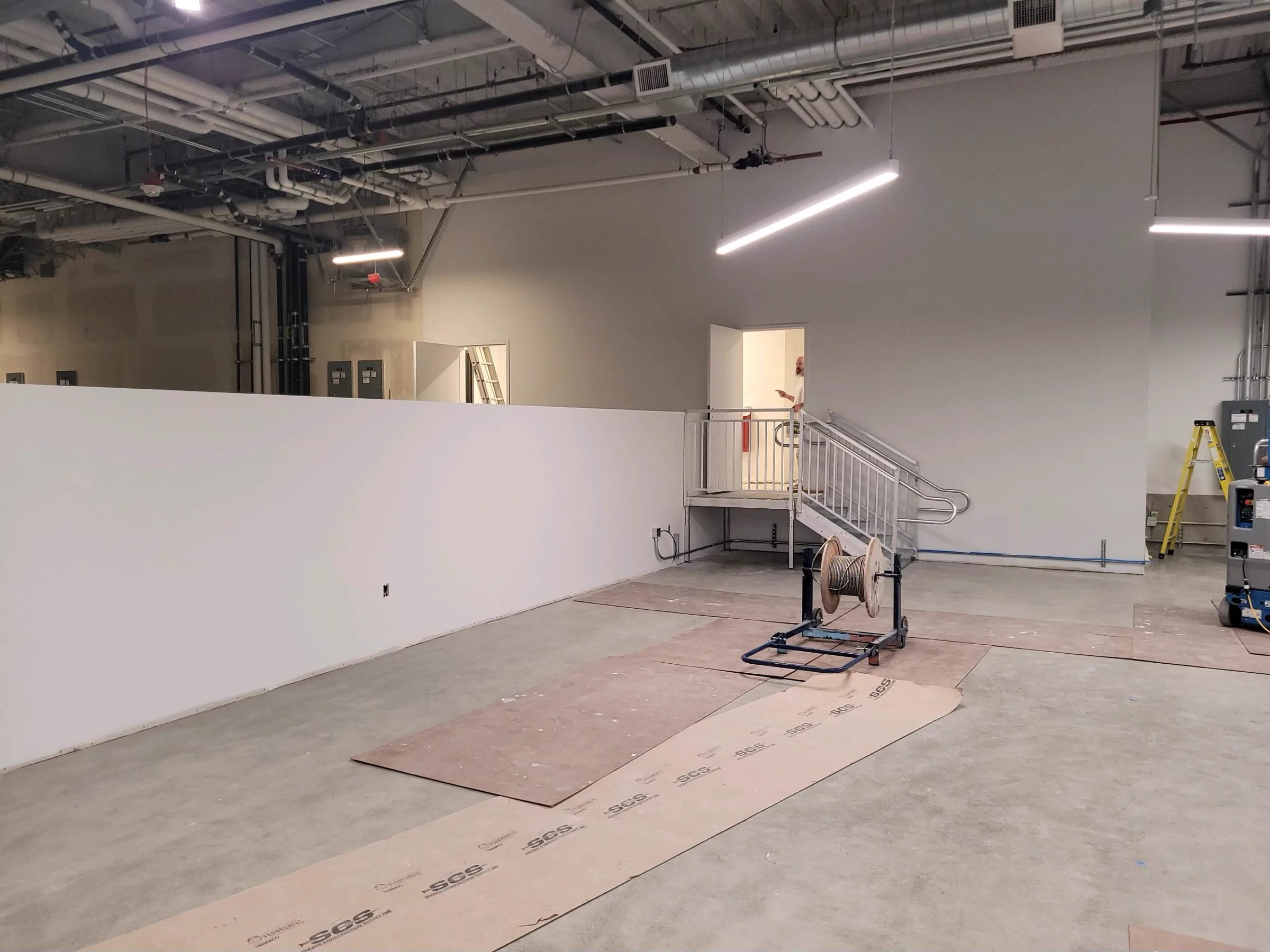
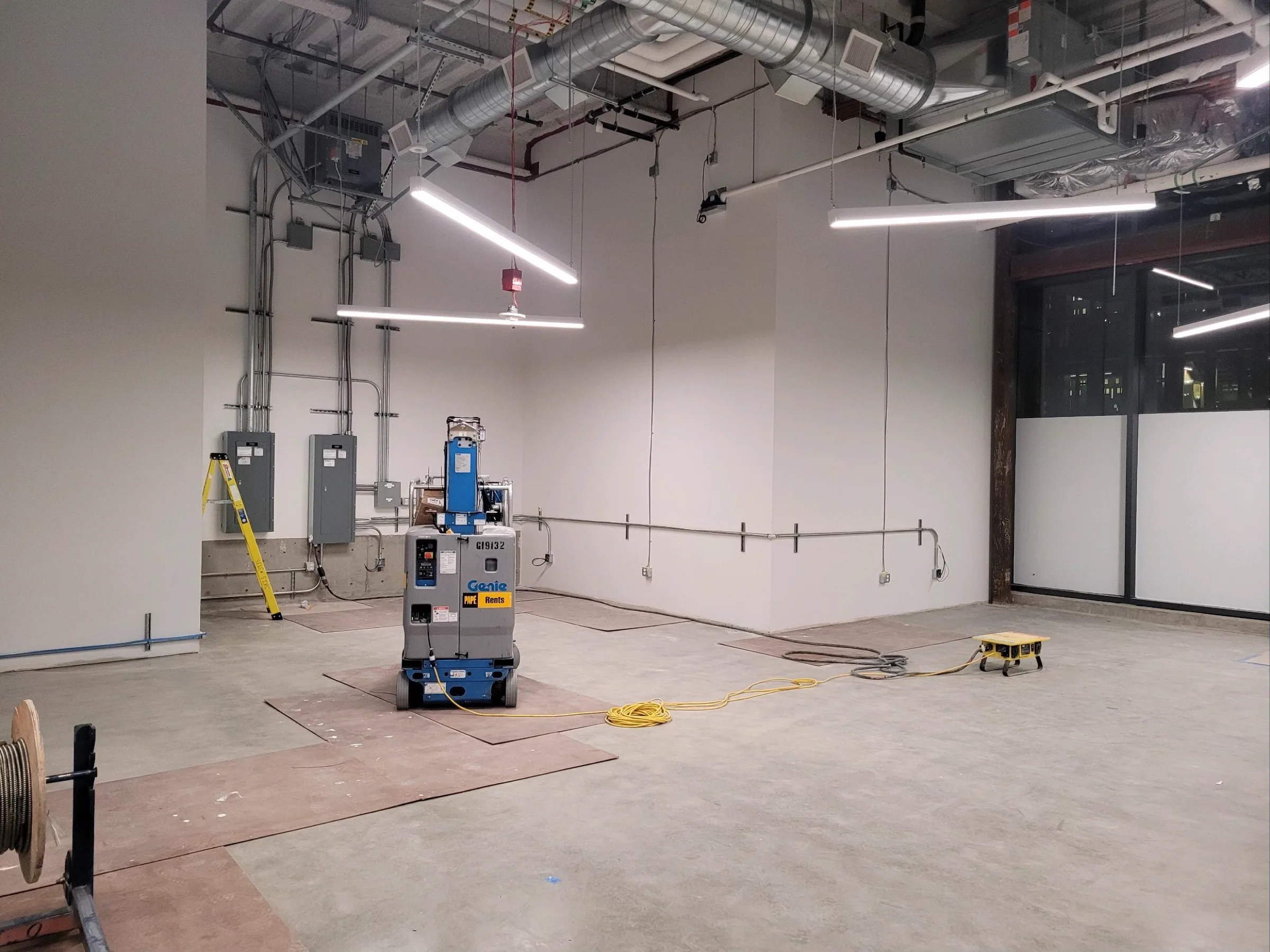
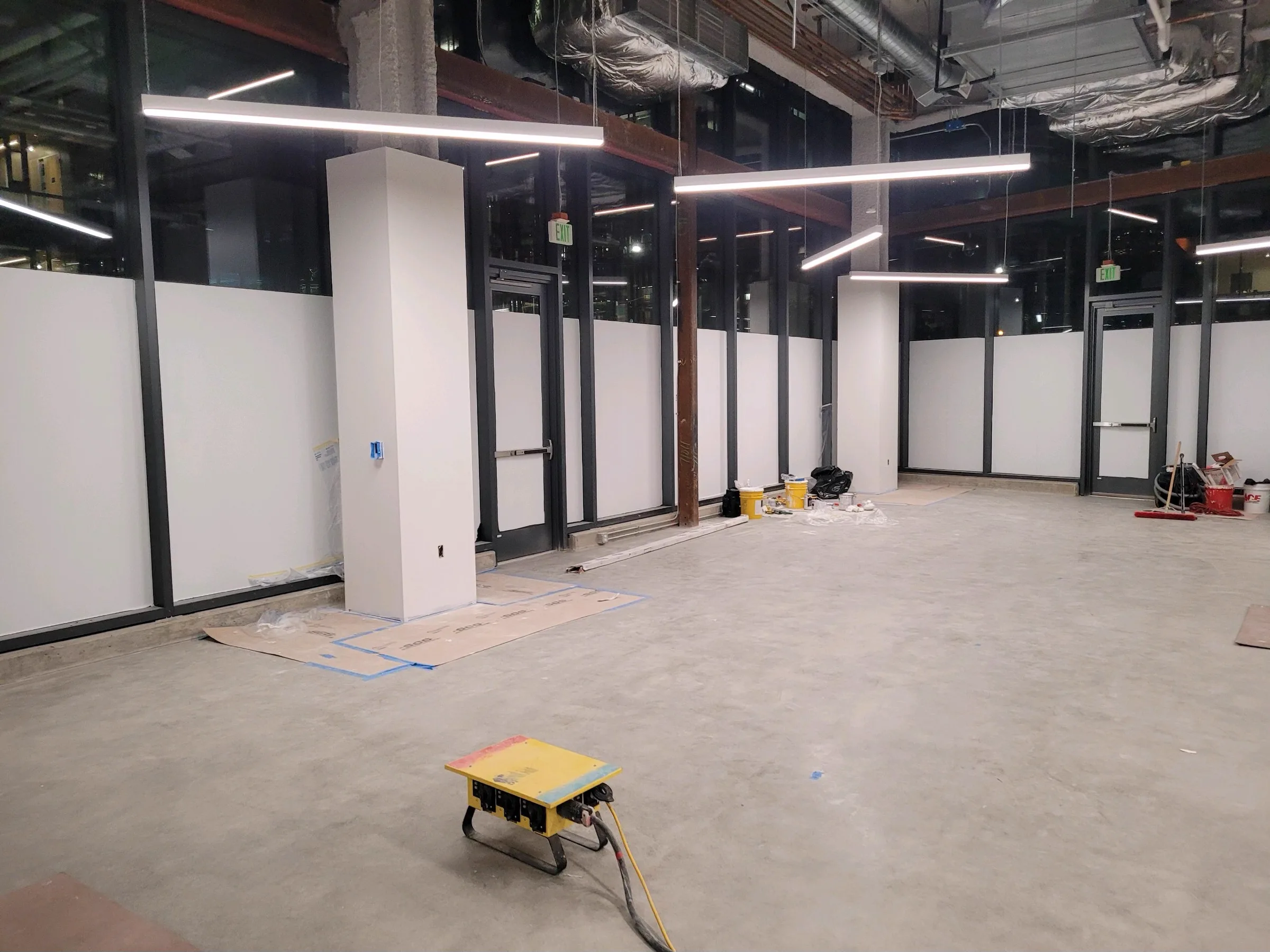
Concrete floor. Exposed ceiling. Partial drywall partitions. Six skylights from the mezzanine above.
Architectural renders, floor plans, equipment placement. Two months of drawings before any tool was unboxed.
Walls, lighting, ventilation, electrical. The Haas TM1P weighs about 5,500 lbs and needed a slab that wouldn't move.
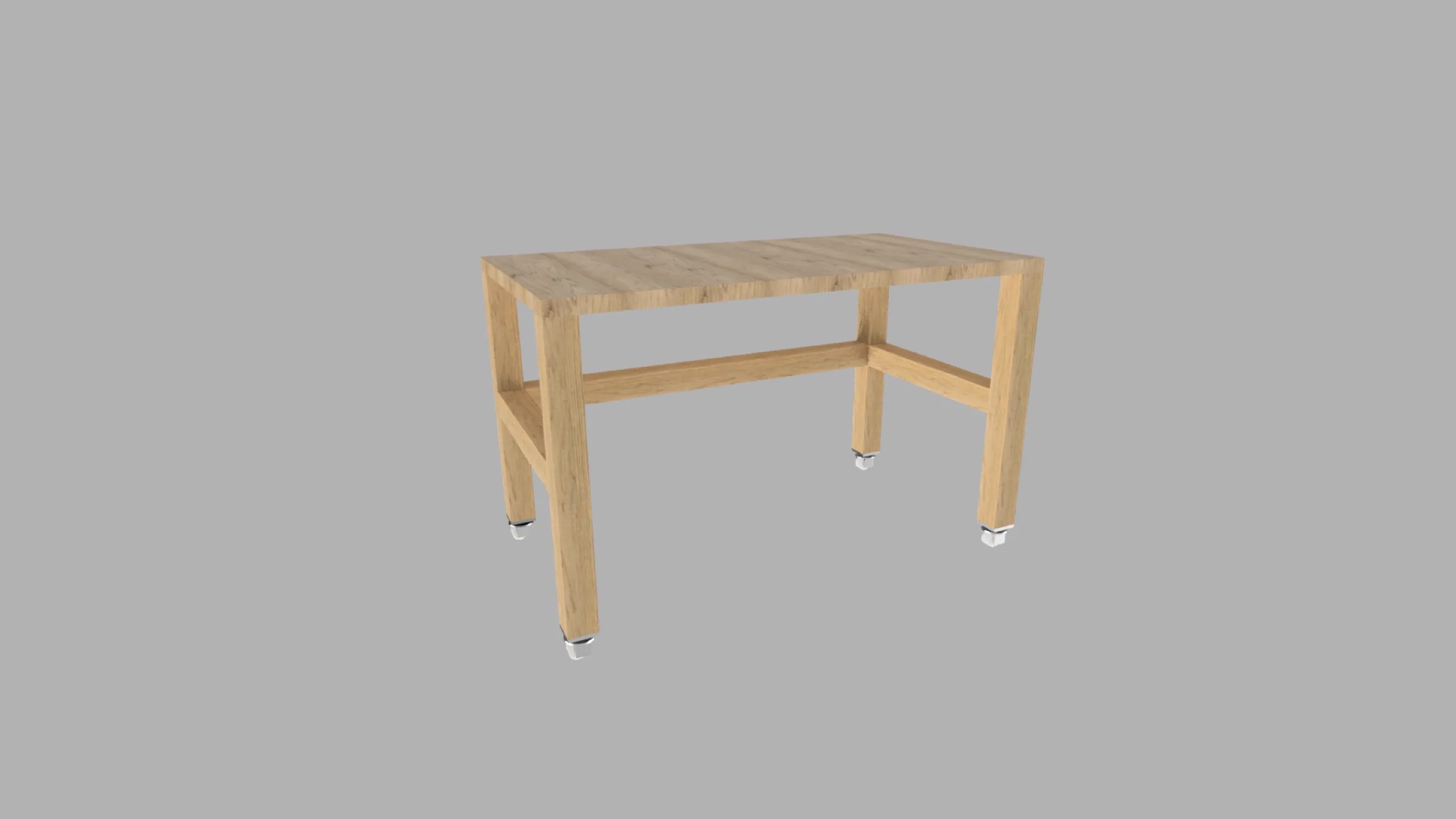
CNC mill, robotic arm, oak workbenches, modular synthesizers. Doors open daily, every weekday of 2023.
Before any tool was placed, the space was rendered, plotted, and pre-walked in software — every workbench, light, and machine in its eventual place.
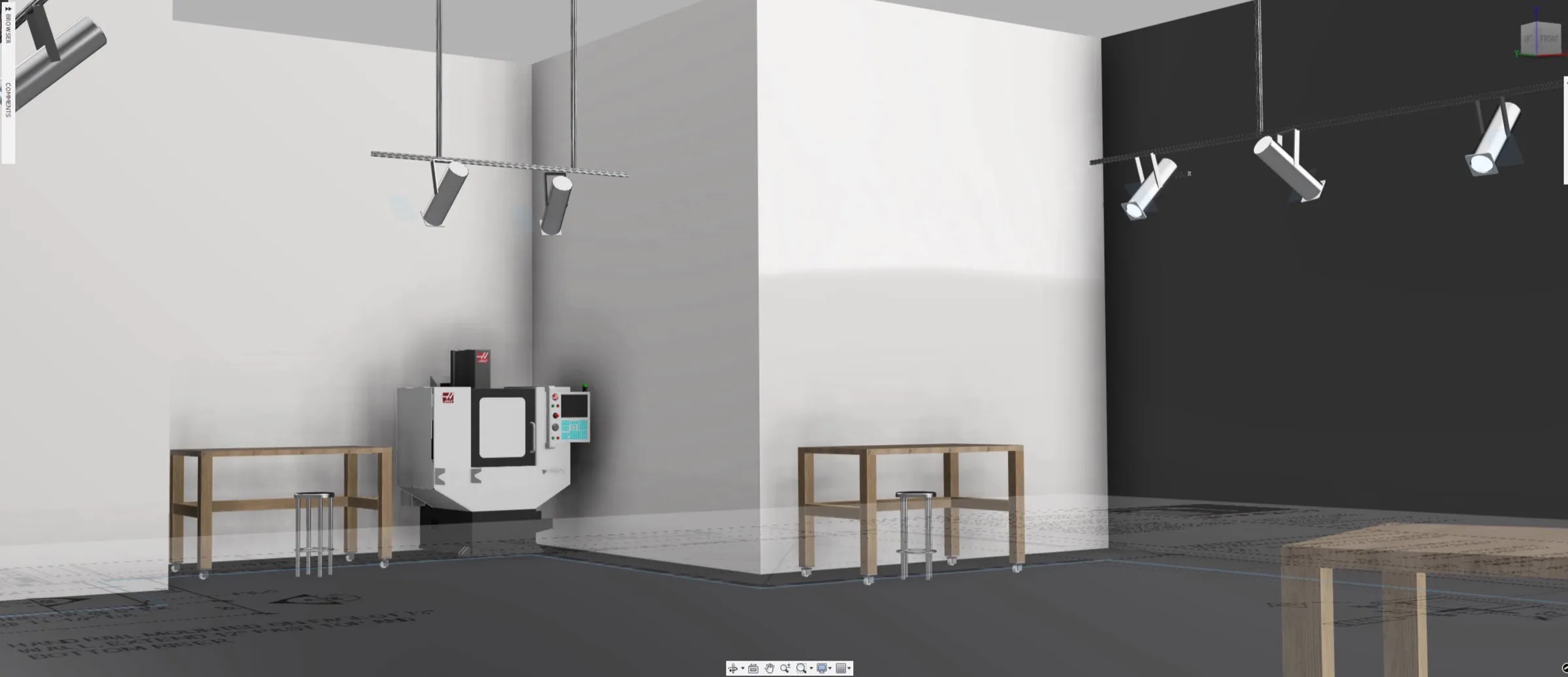
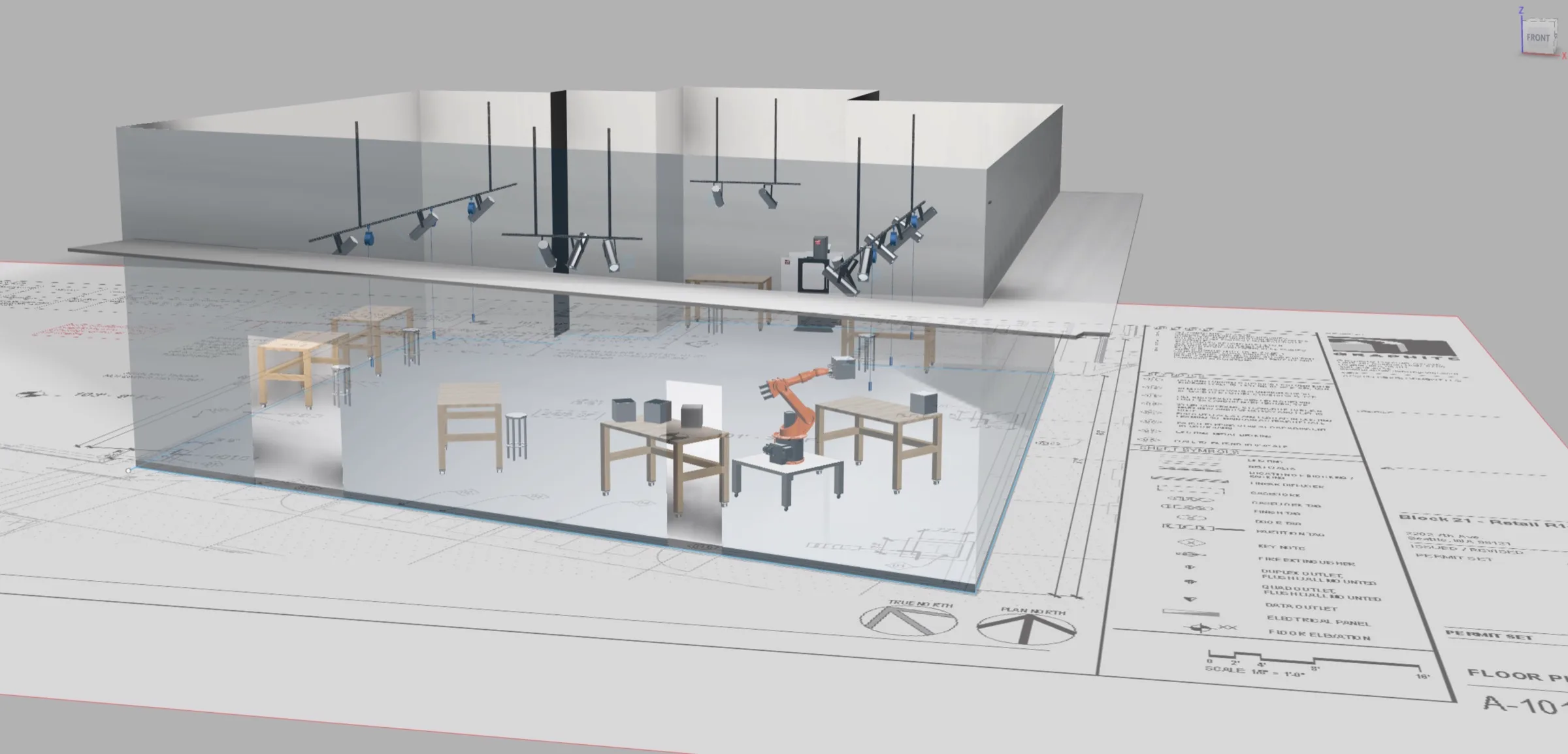
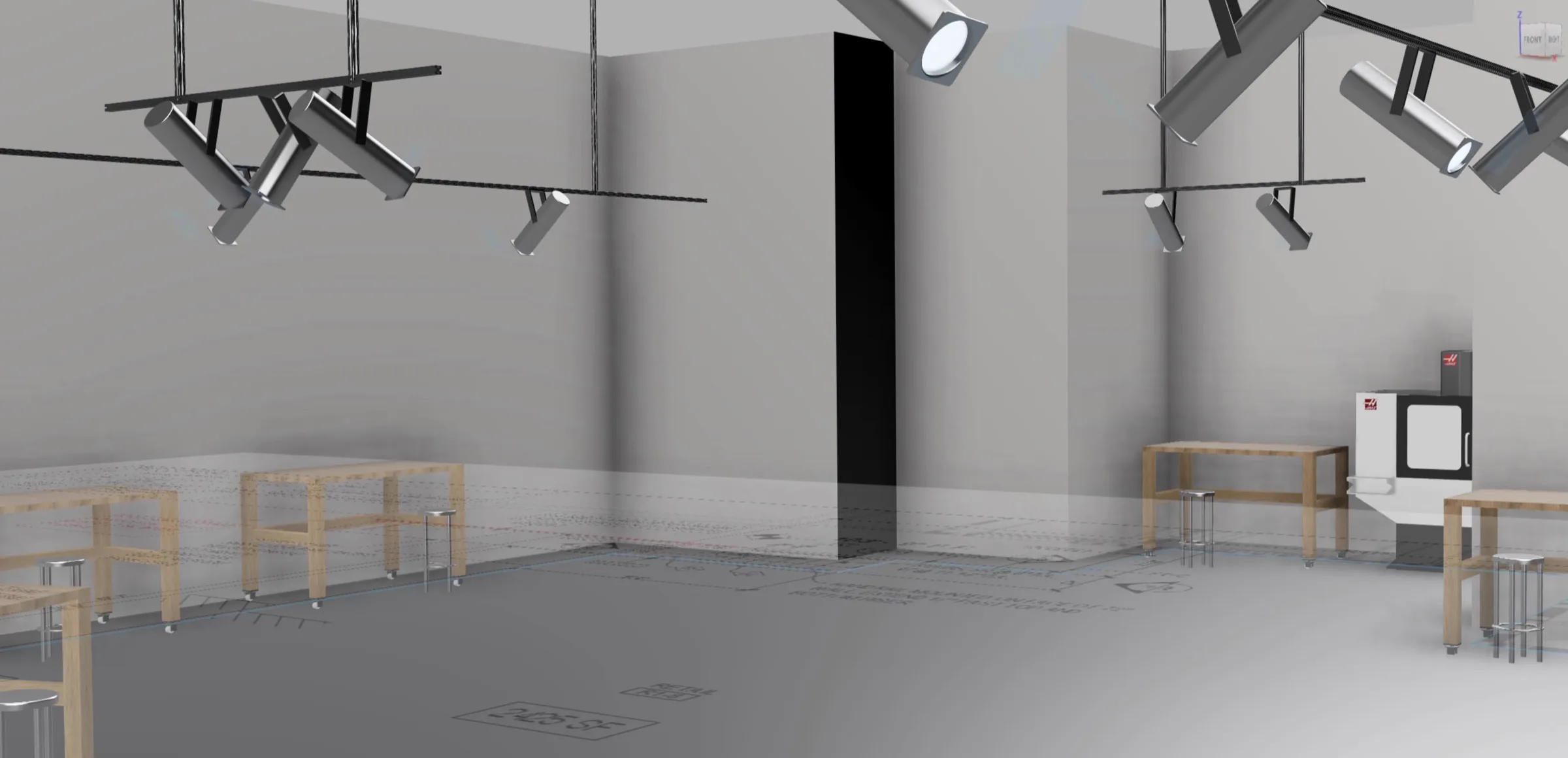
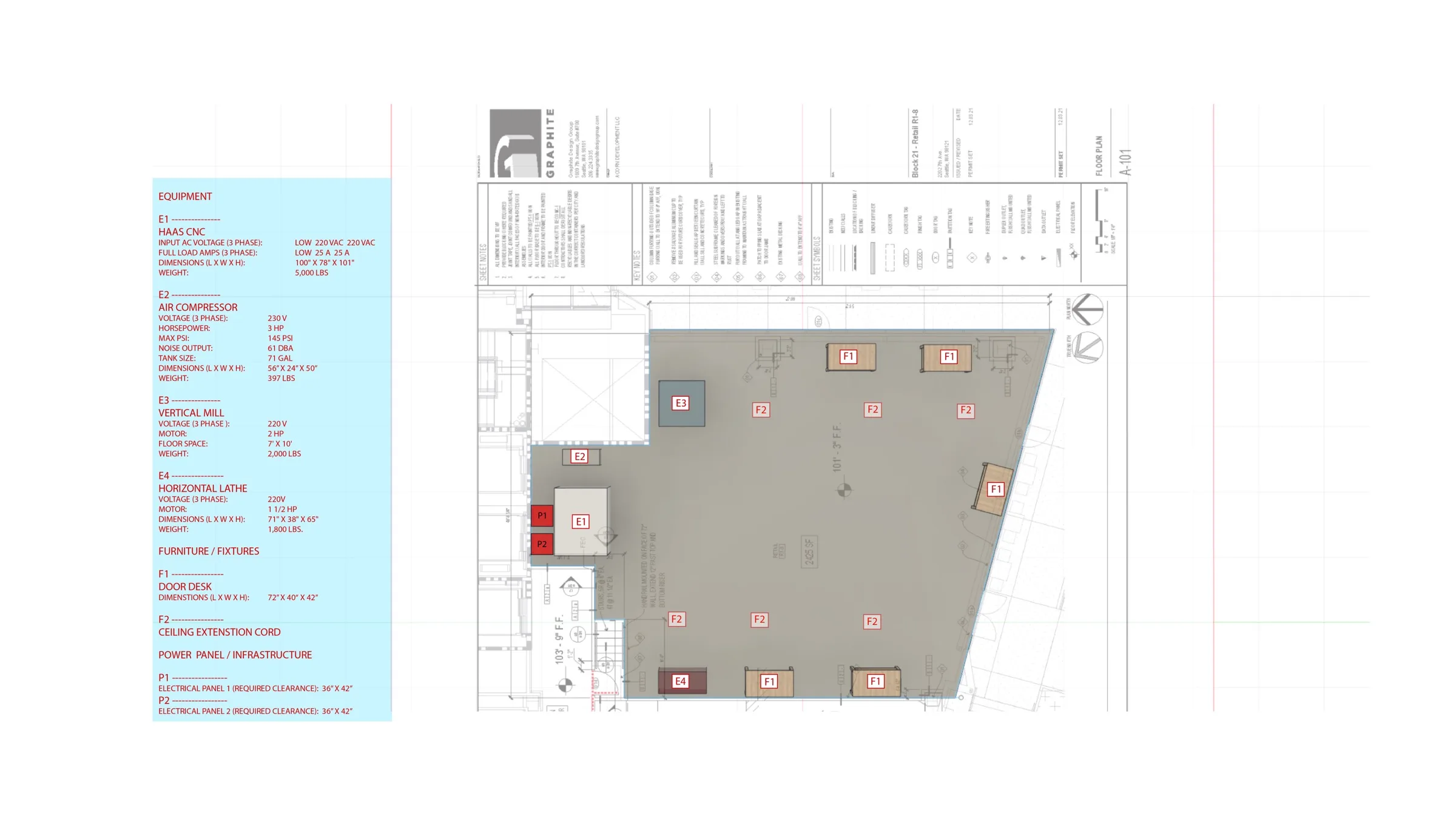
From shell to ready-to-open. Drywall, lighting, ventilation, electrical — and the hundred small decisions that come before the first cut.
A construction site that was also a design problem. Conduit had to land where the tools would actually be. Lights had to sit over the right benches the first time, because moving them later meant patching a finished ceiling.
Done with Amazon's GREF facilities crew, day-by-day, with the drawings updating as we went.
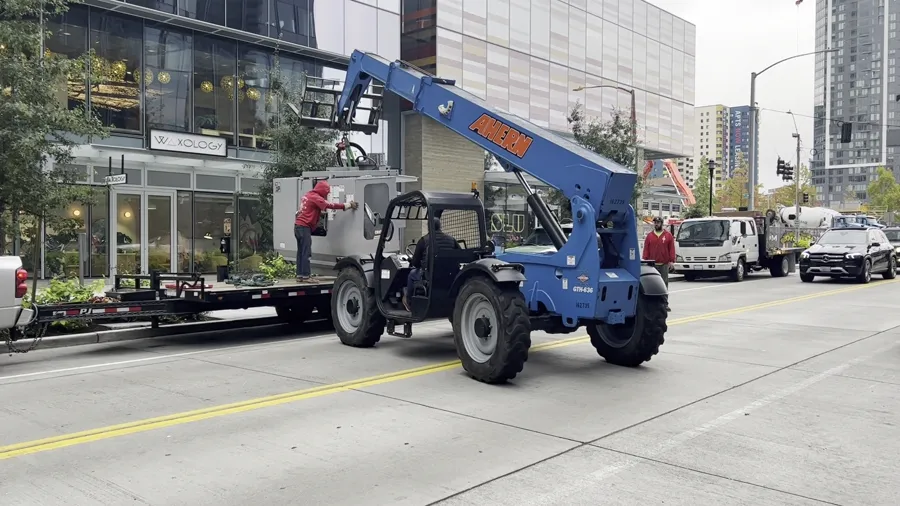
A Haas TM1P toolroom mill — roughly 5,500 lbs of cast iron — dropped off curbside on a South Lake Union sidewalk and forklifted in through the front door, in front of whoever happened to be walking past. The single biggest thing the studio would ever take delivery of.
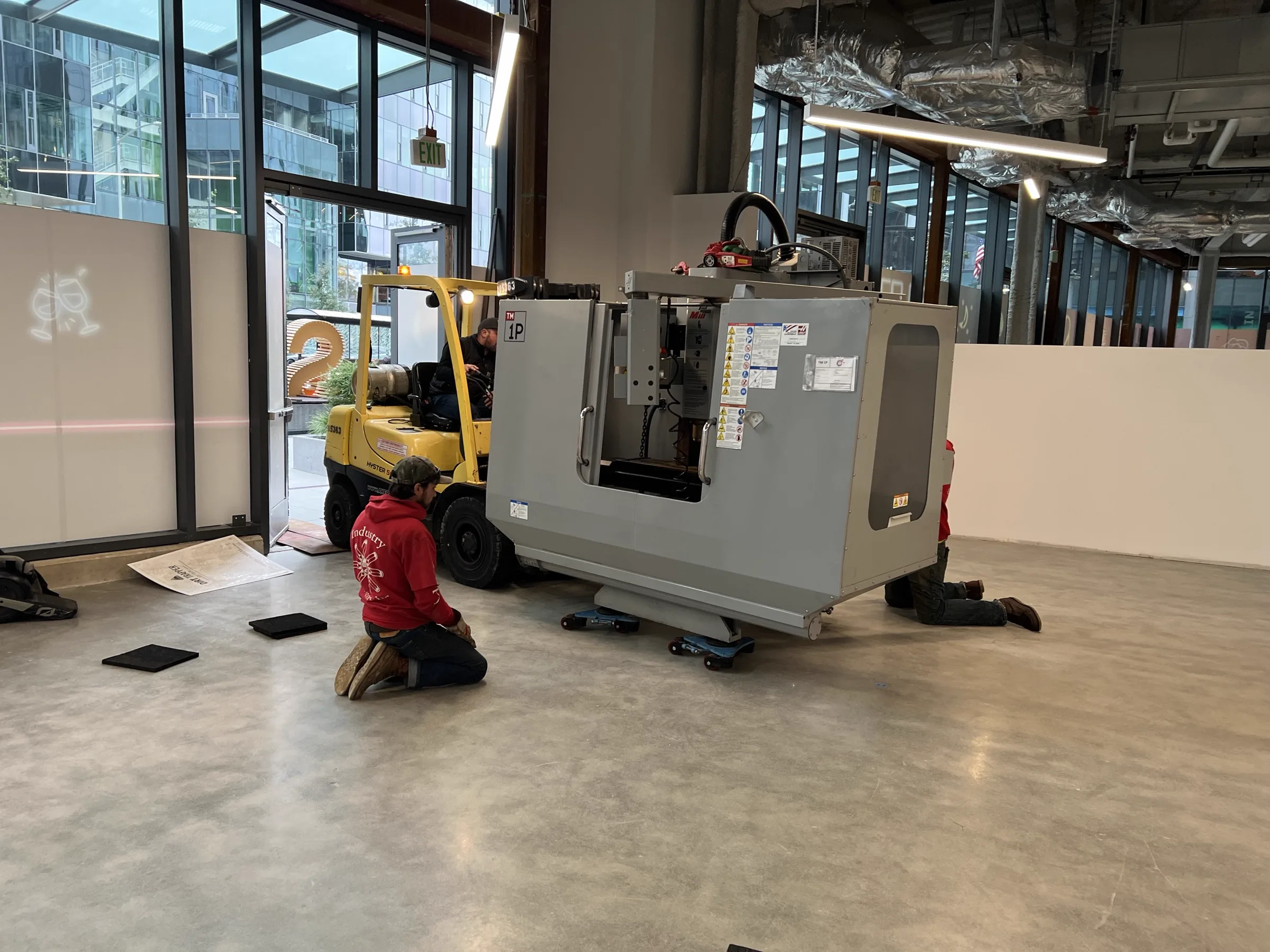
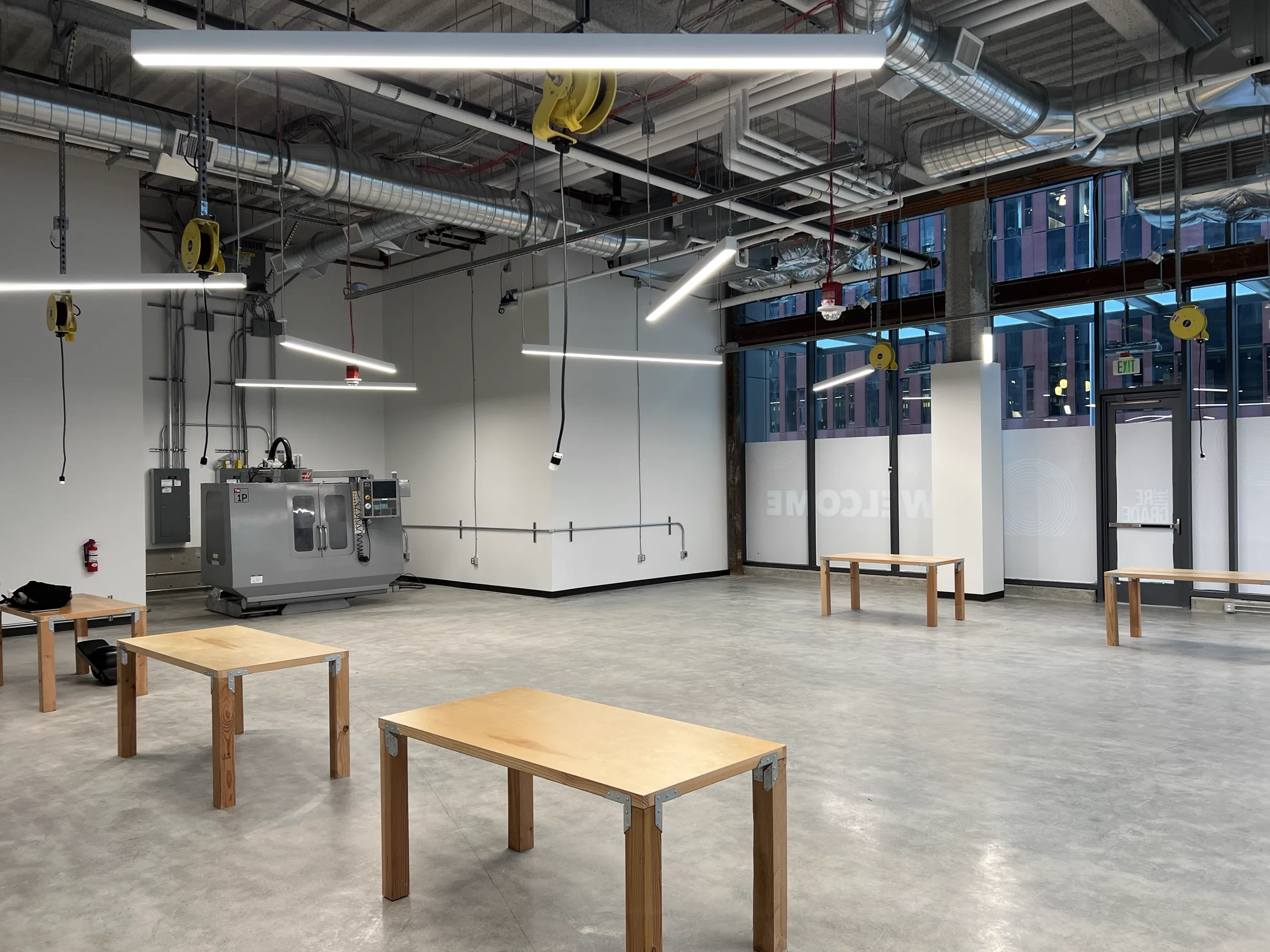
Mill in place. Benches set. Pneumatics overhead, lighting trimmed, decals on the glass. Six months of drawings, finally three-dimensional.
Open every weekday of 2023. Paintings on the wall, the mill running, the synth patched — and a steady current of visitors from the buildings around it.
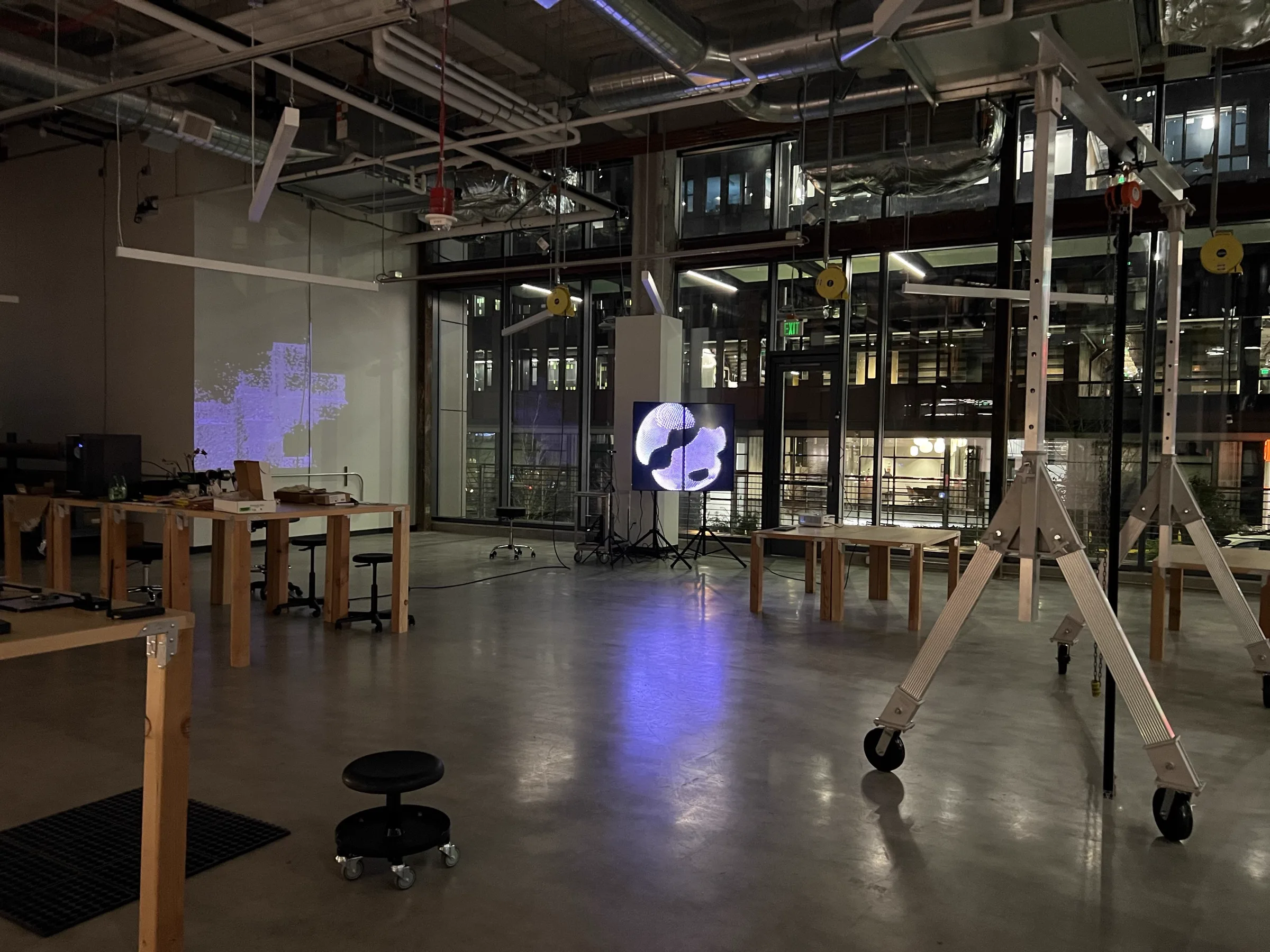
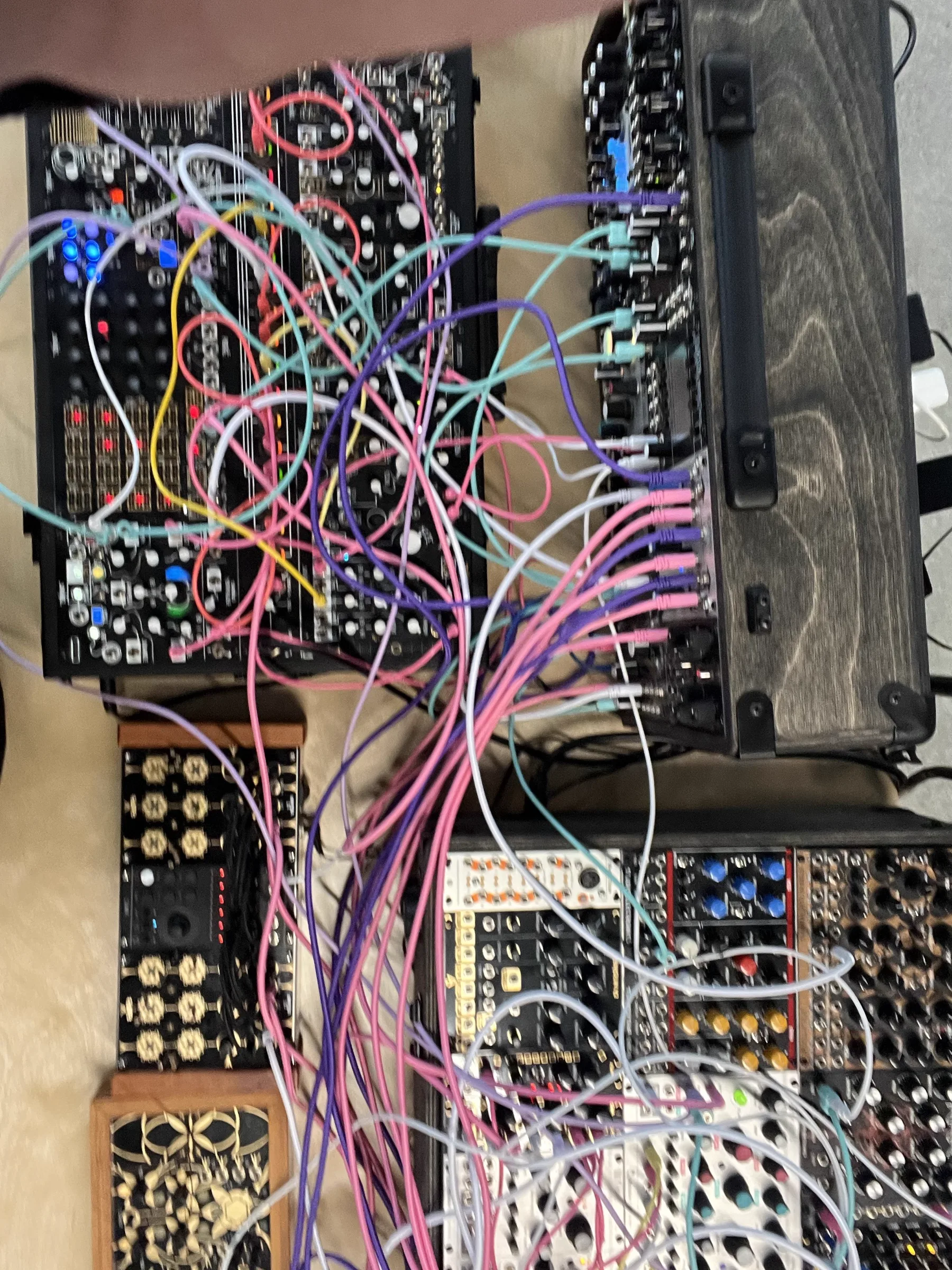
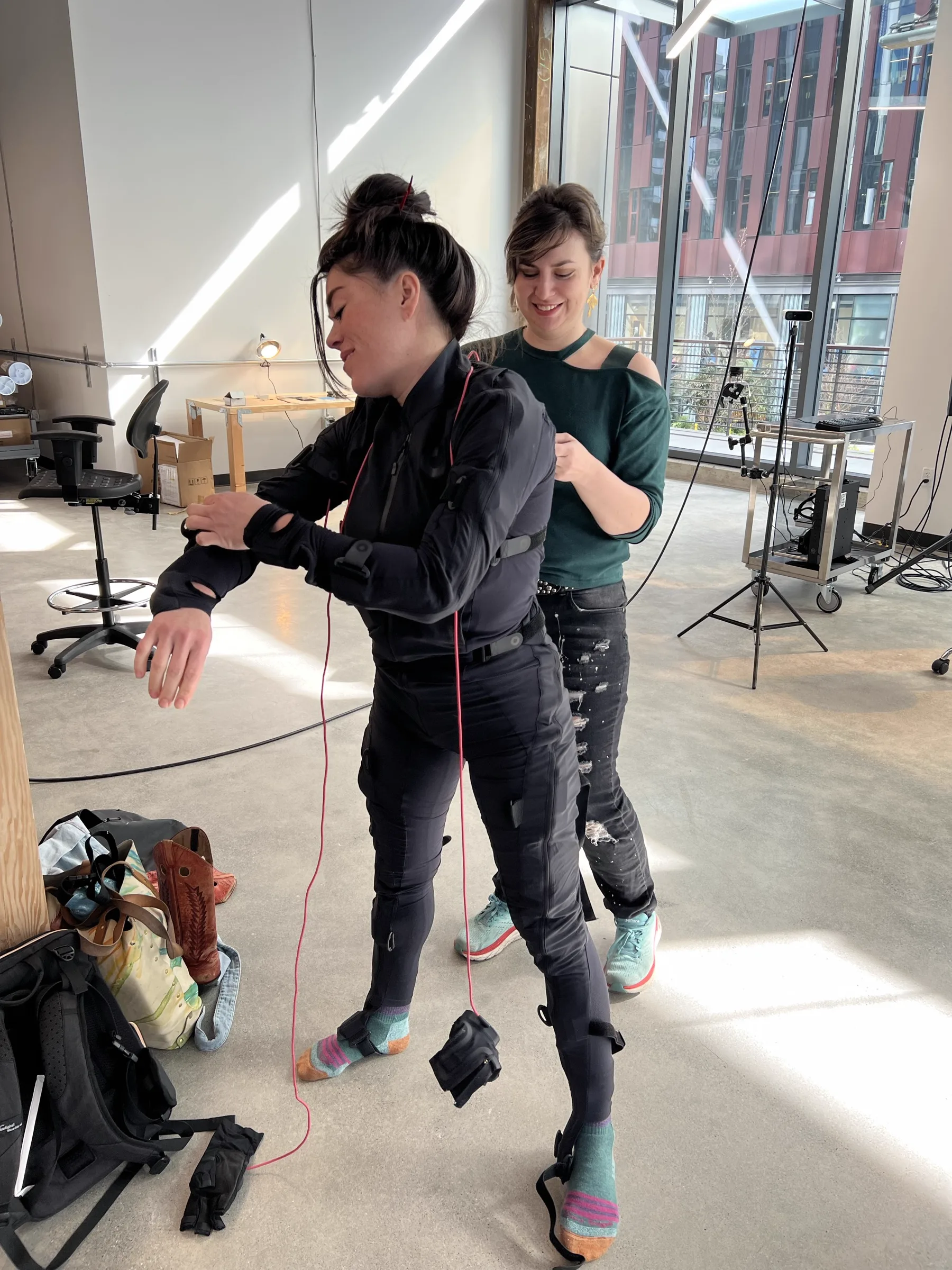
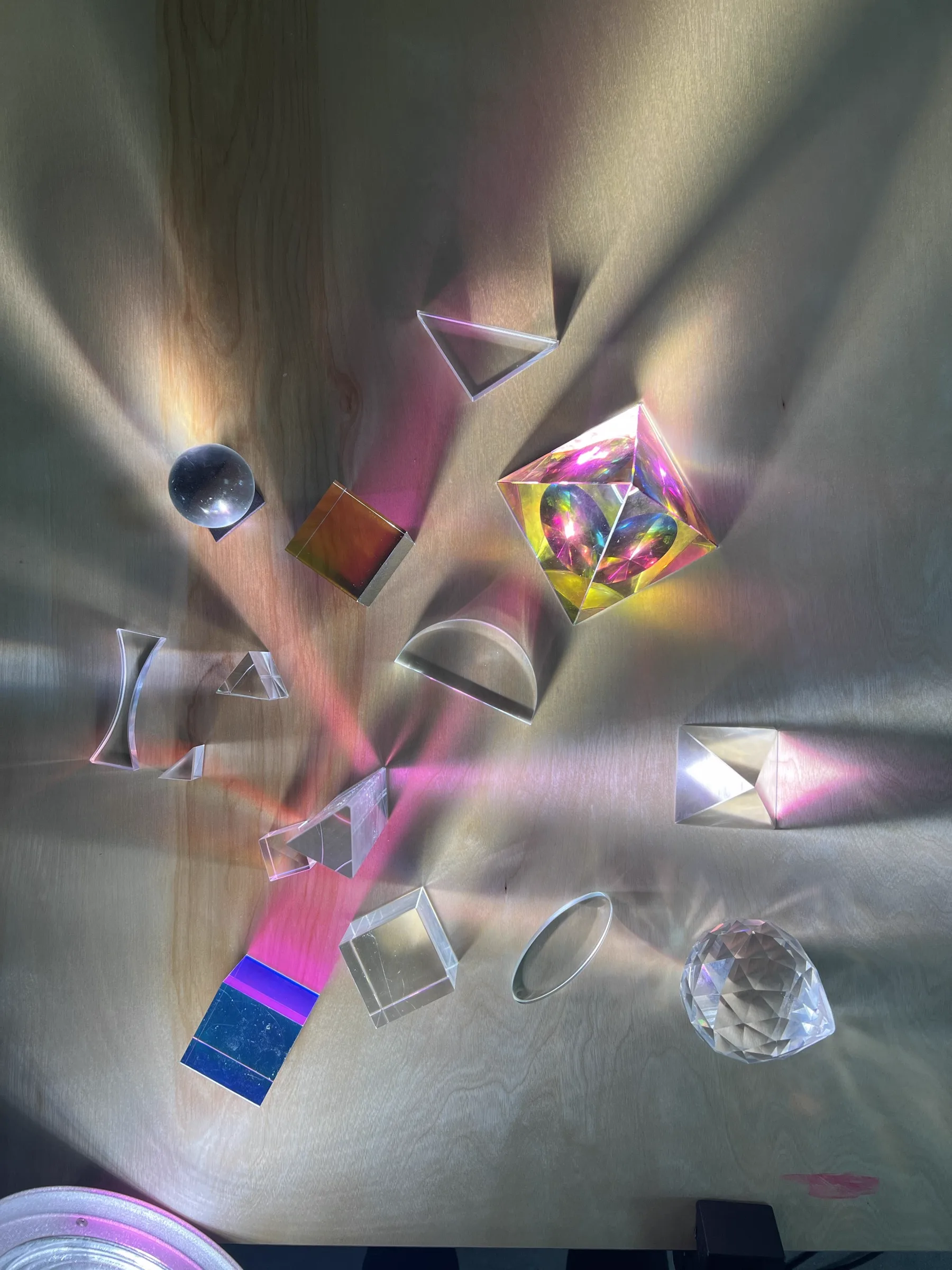
The mill is running. A circuit board is half-soldered on a bench. Six people are arguing about what they'd build if they had the time, and three of them are engineers who'd never been inside a fabrication shop before.Joshua Borsman · Artist in Residence · 2023
Seven-axis articulated arm. Shipped in pieces, assembled on the studio floor over a week, then parked at the front window for the rest of the year — most days holding flowers, sometimes a lamp, sometimes nothing at all.
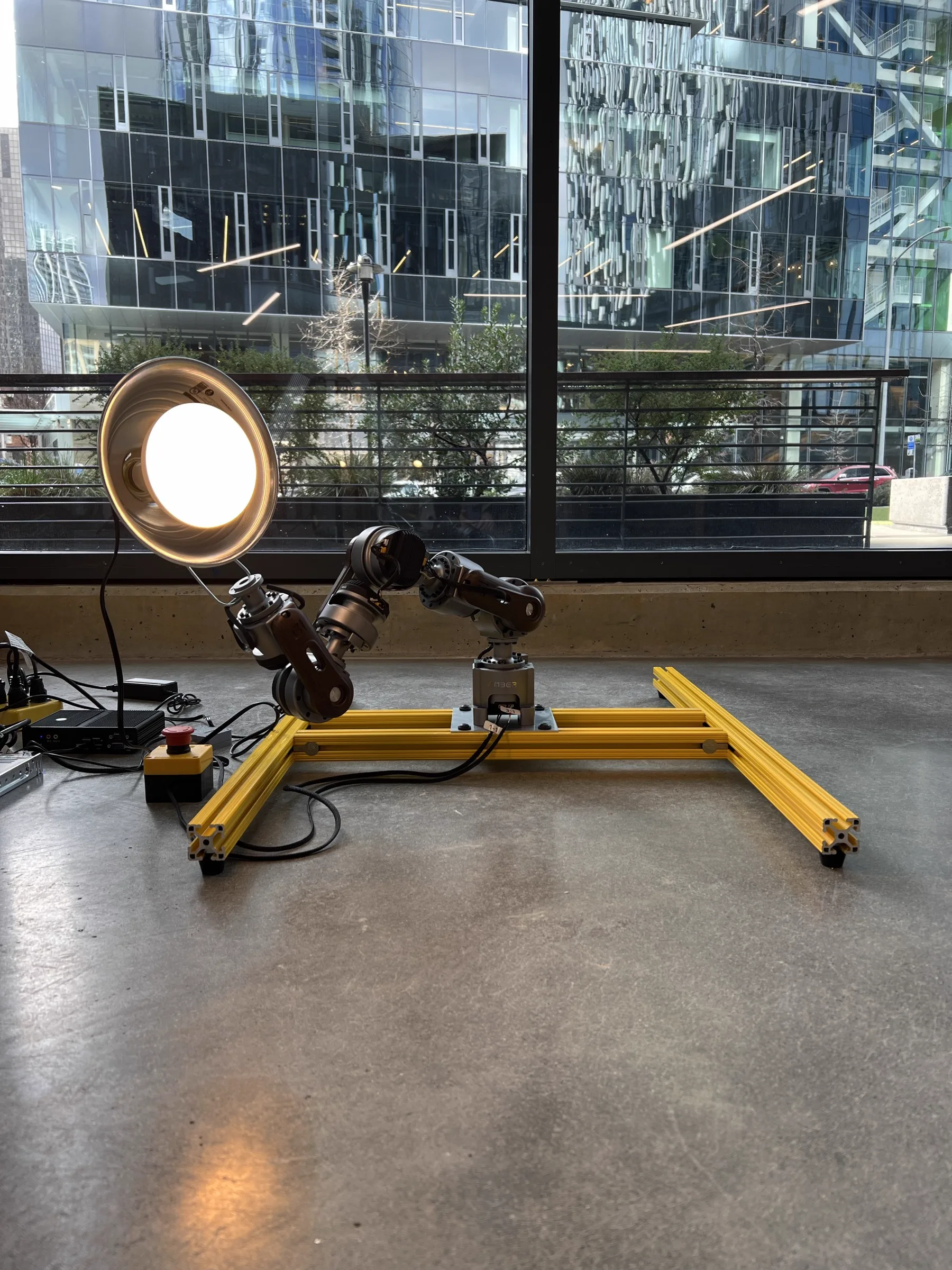
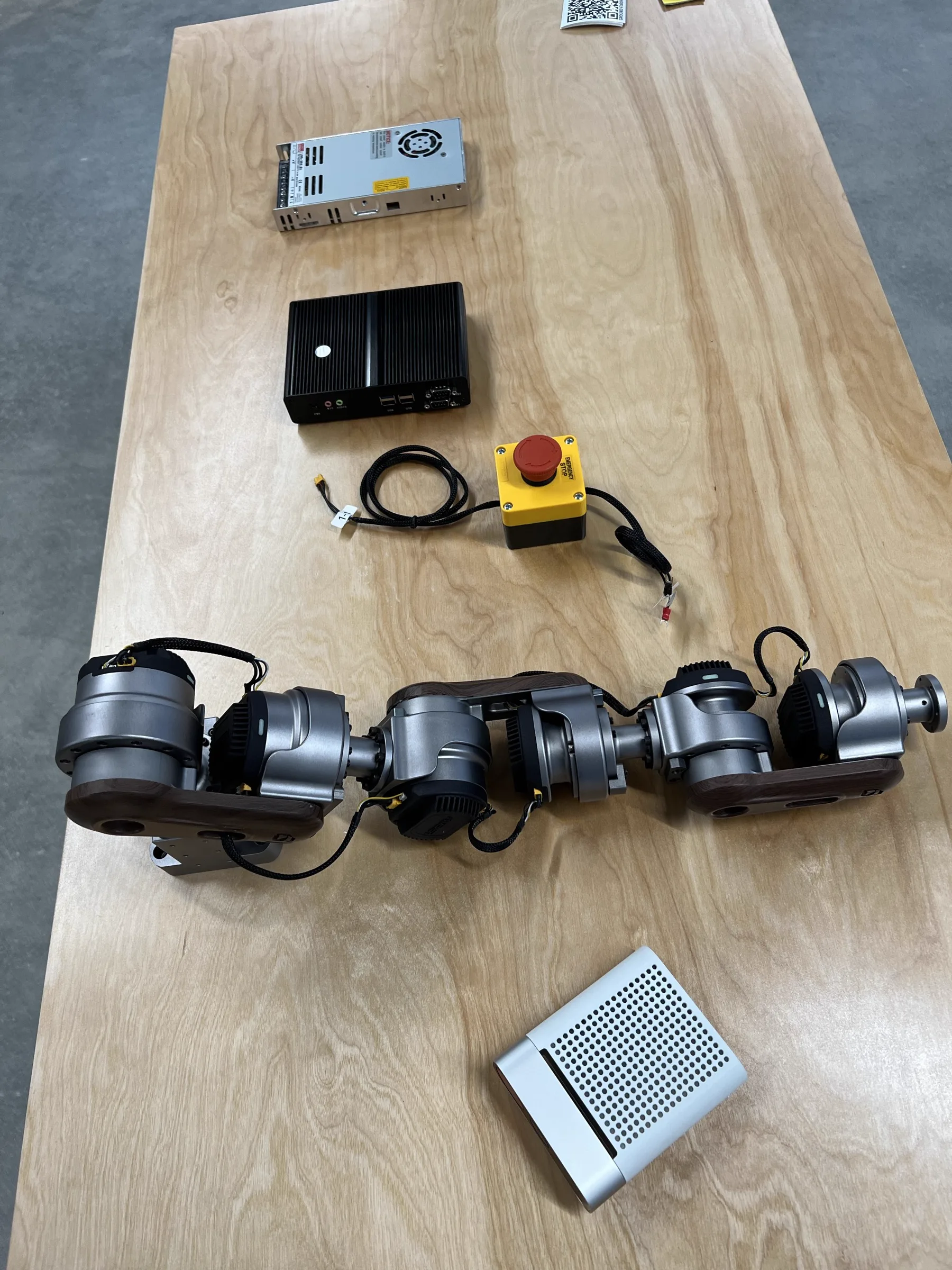
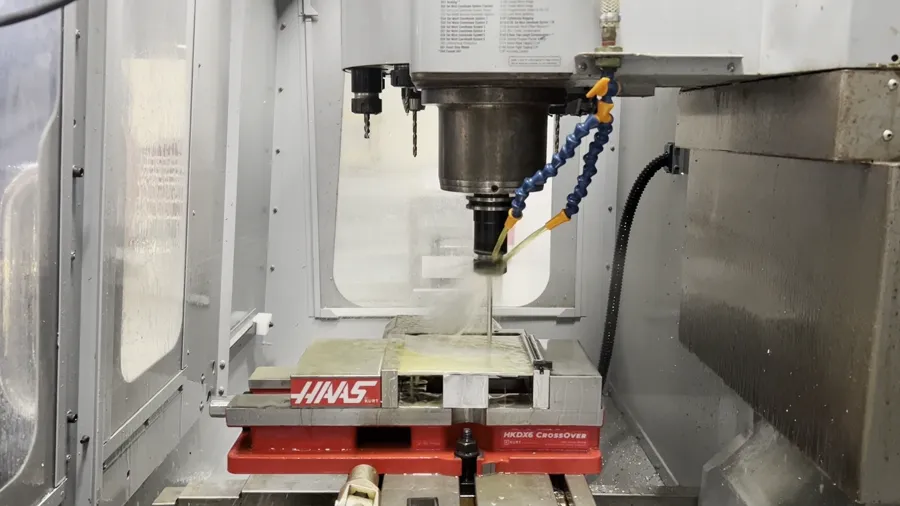
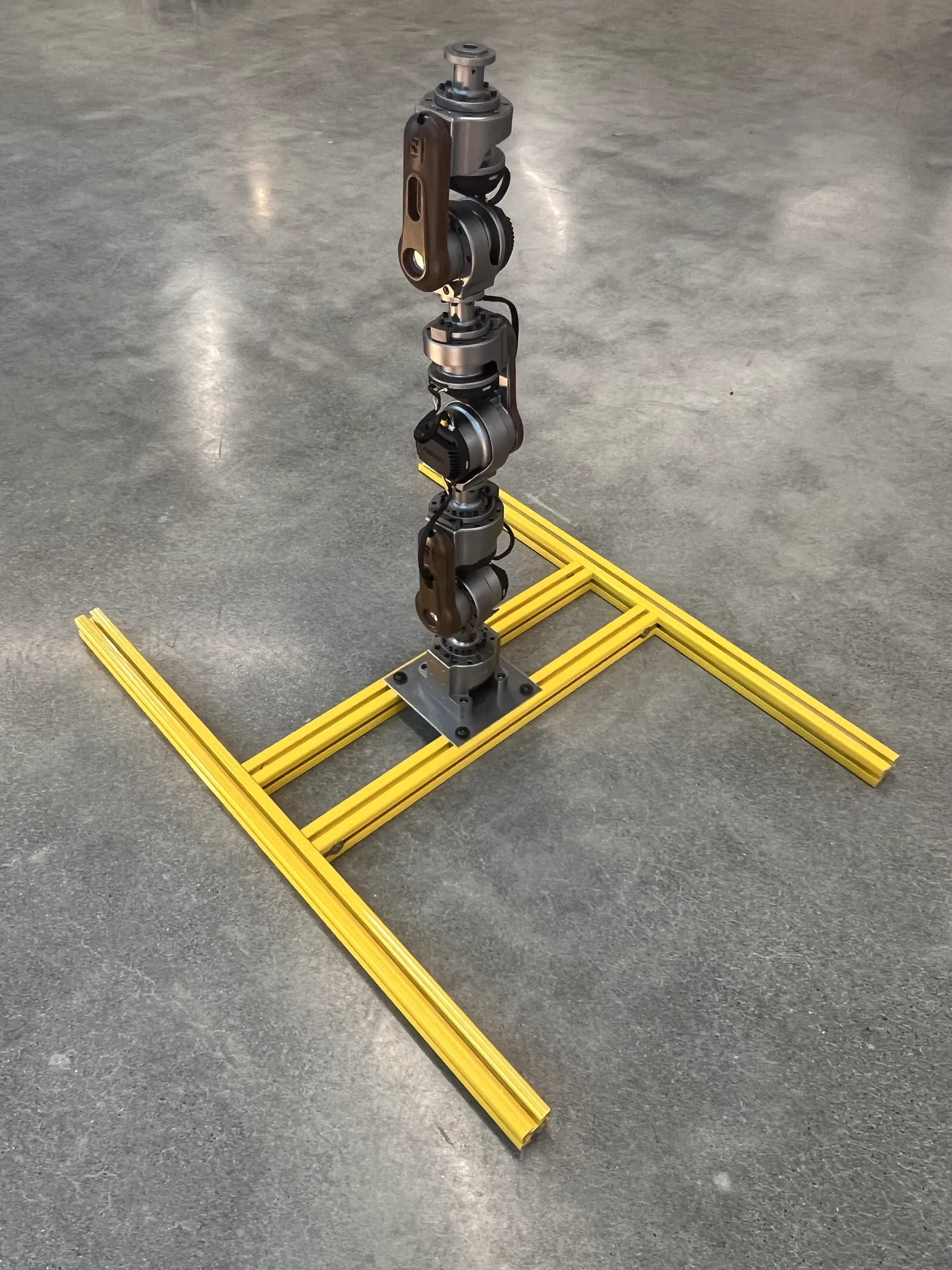
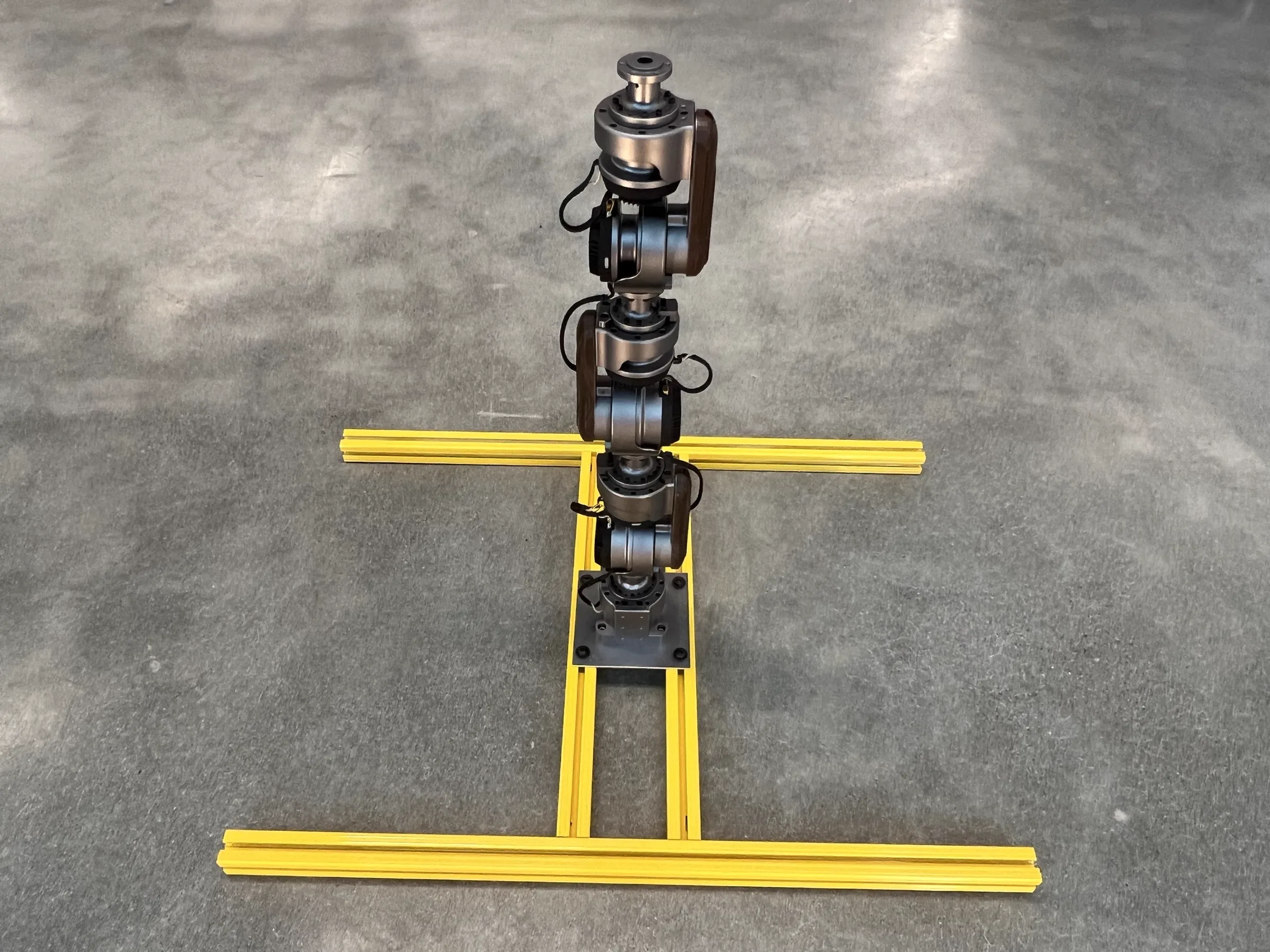
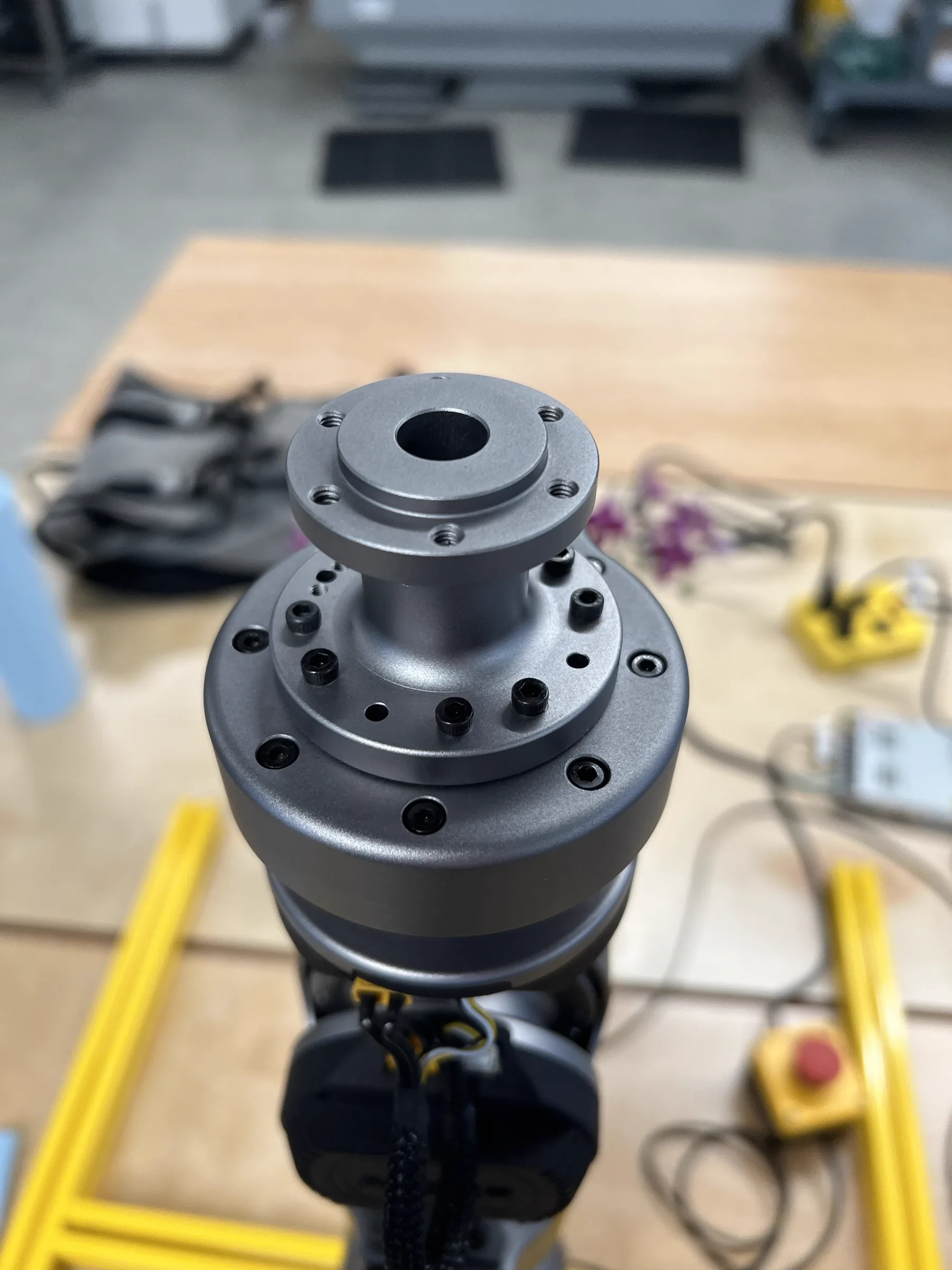
The mill's first job was the steel plate that anchors Waldorf's stand.
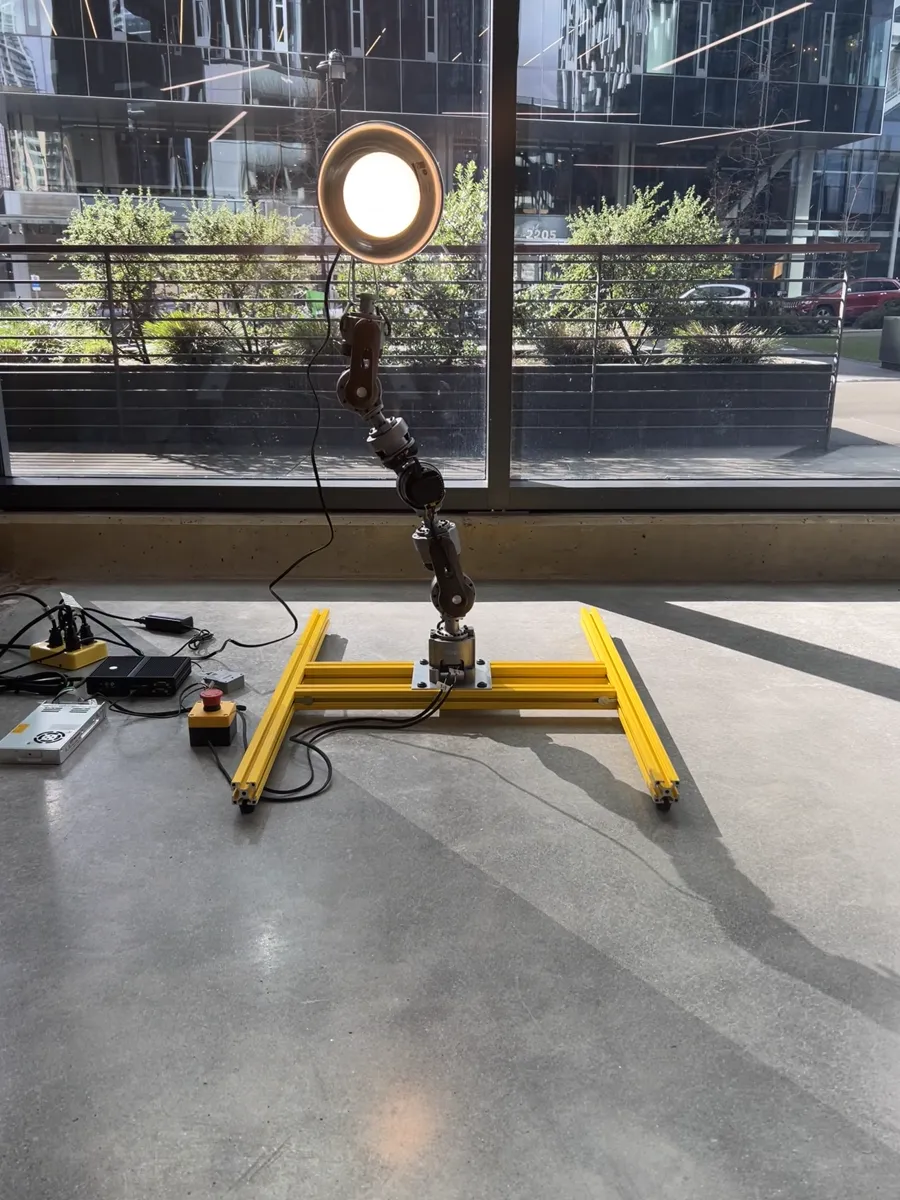
The mill is industrial — loud, heavy, single-purpose. Waldorf is the opposite. He can repeat a path to a tenth of a millimeter, but most of 2023 he just held one thing in the window for someone to notice on their walk home.
He pulled more attention than anything else in the room. People stopped on the sidewalk to figure out what he was.
↳ See Waldorf in motion in Films
Once the doors opened, the studio became a fixture on the block. Pedestrians slowed down on the way to the train. Drivers rolled their windows. Conversations started at the glass.
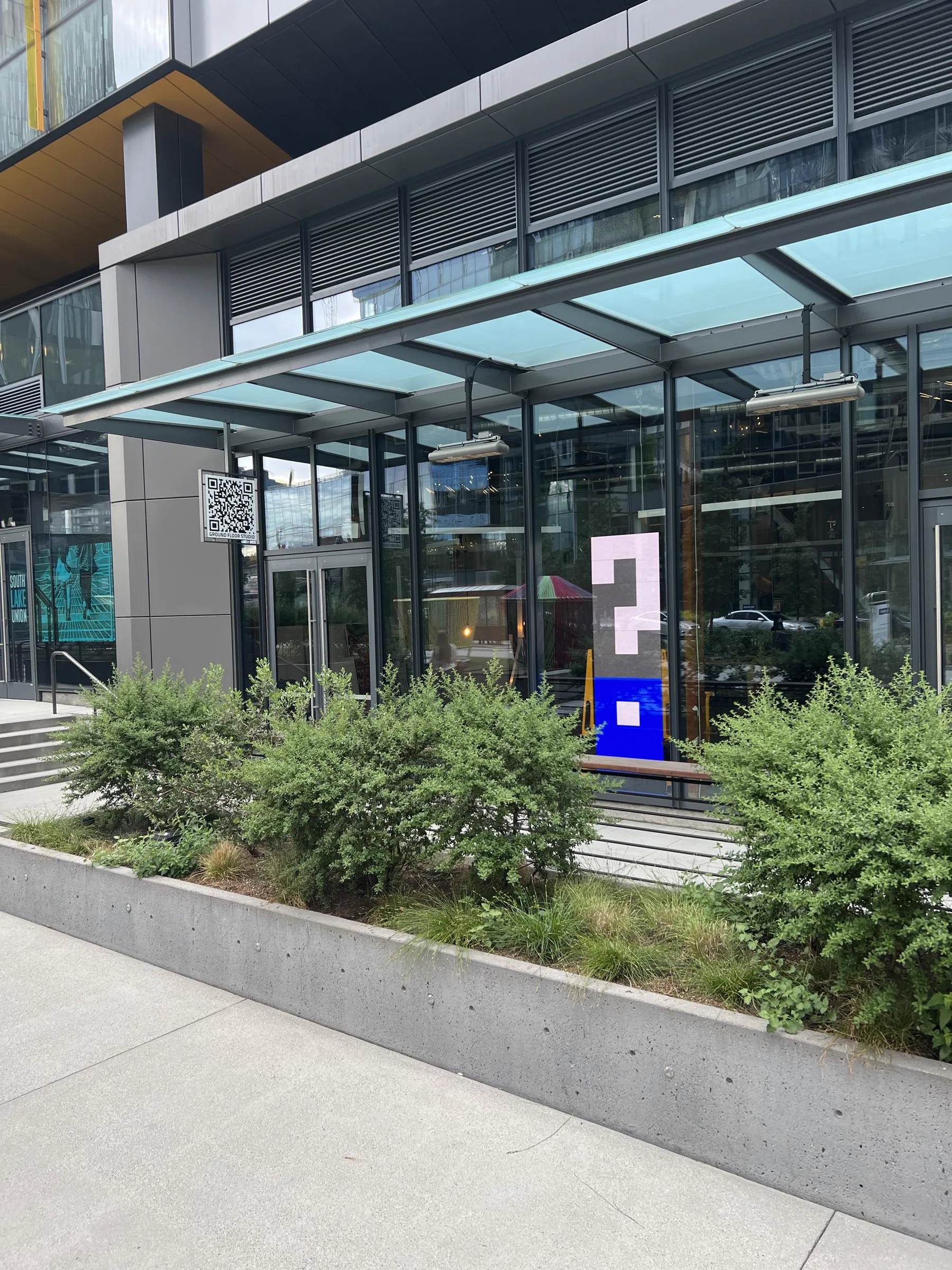
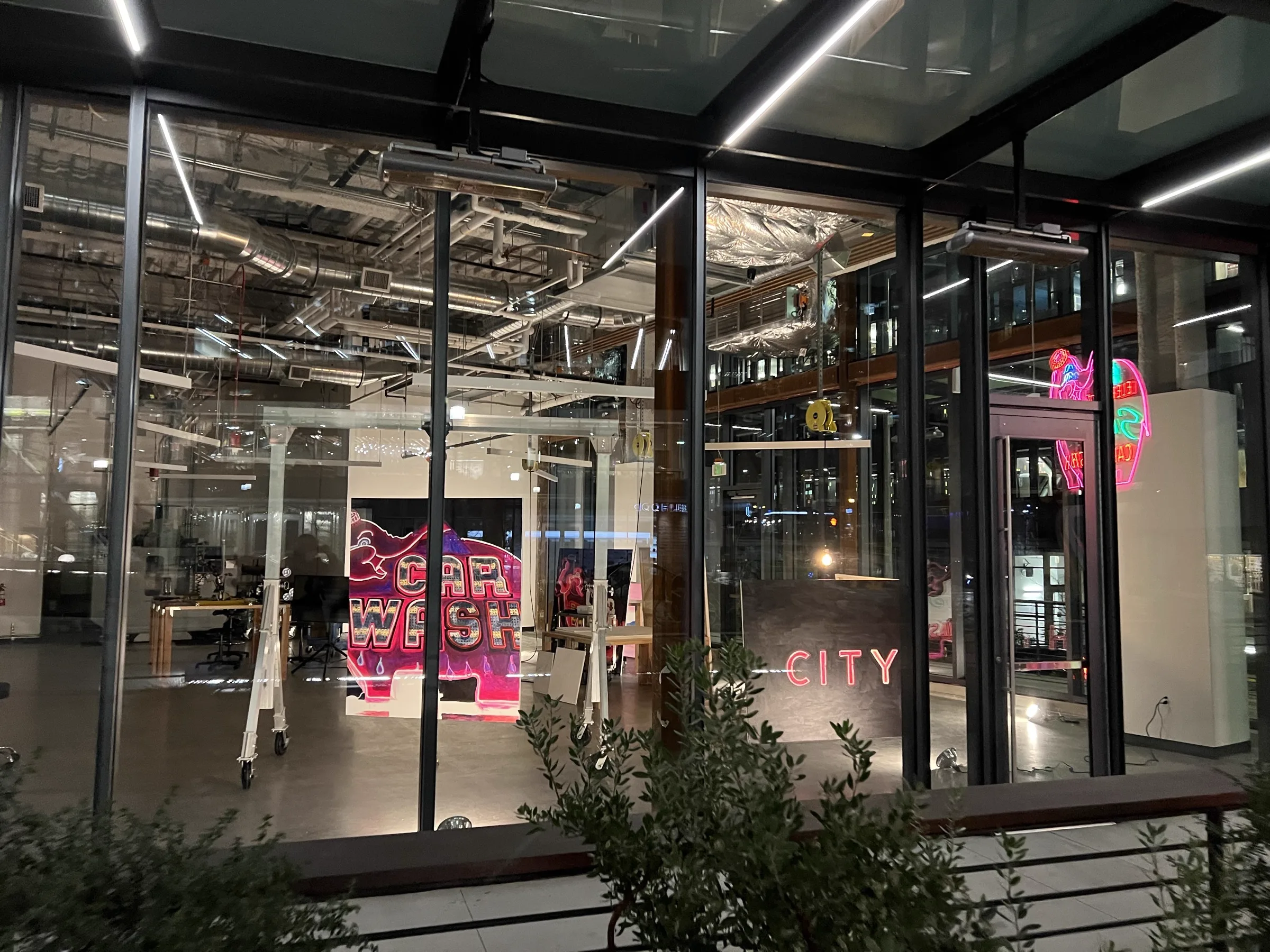
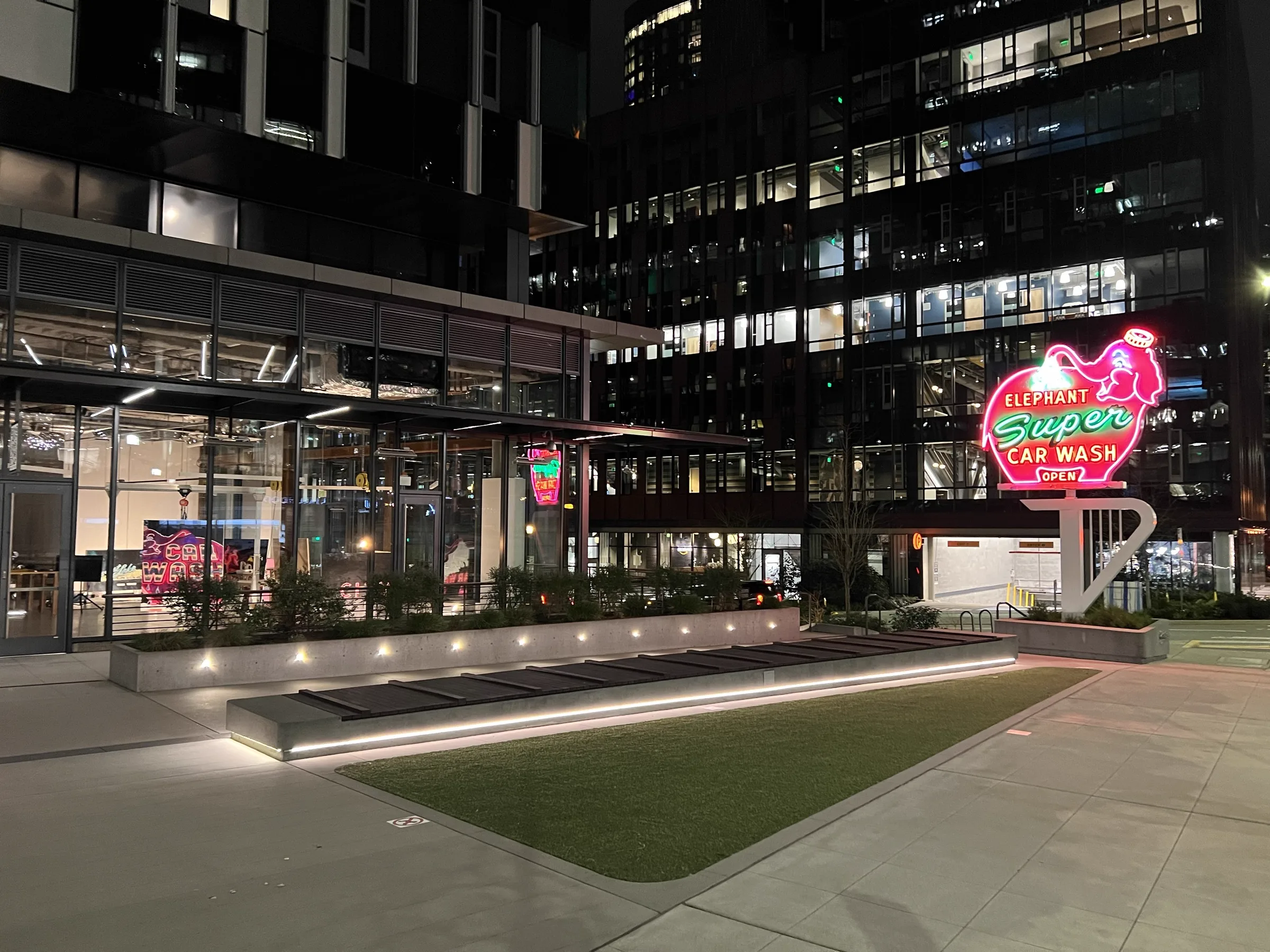
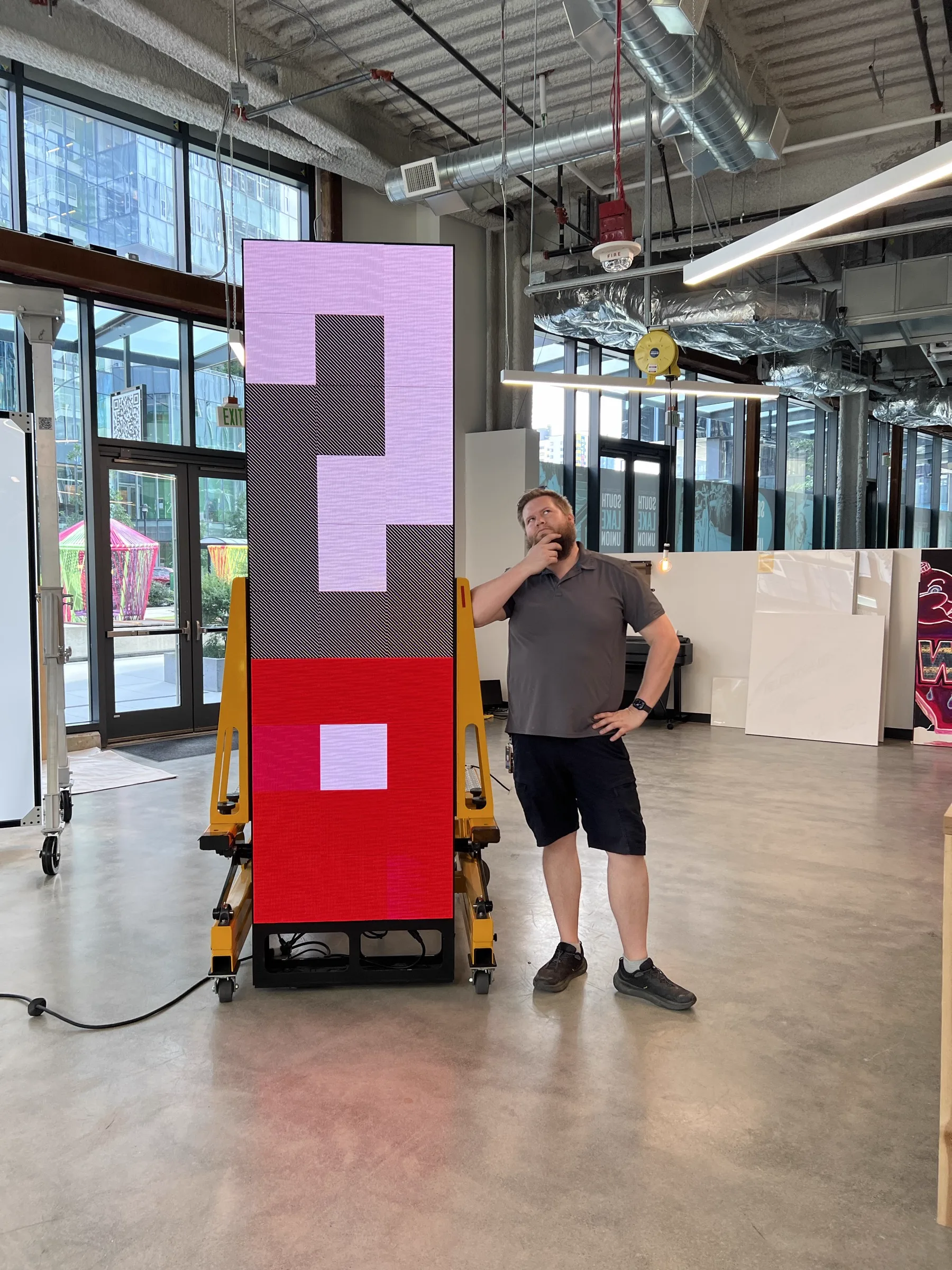
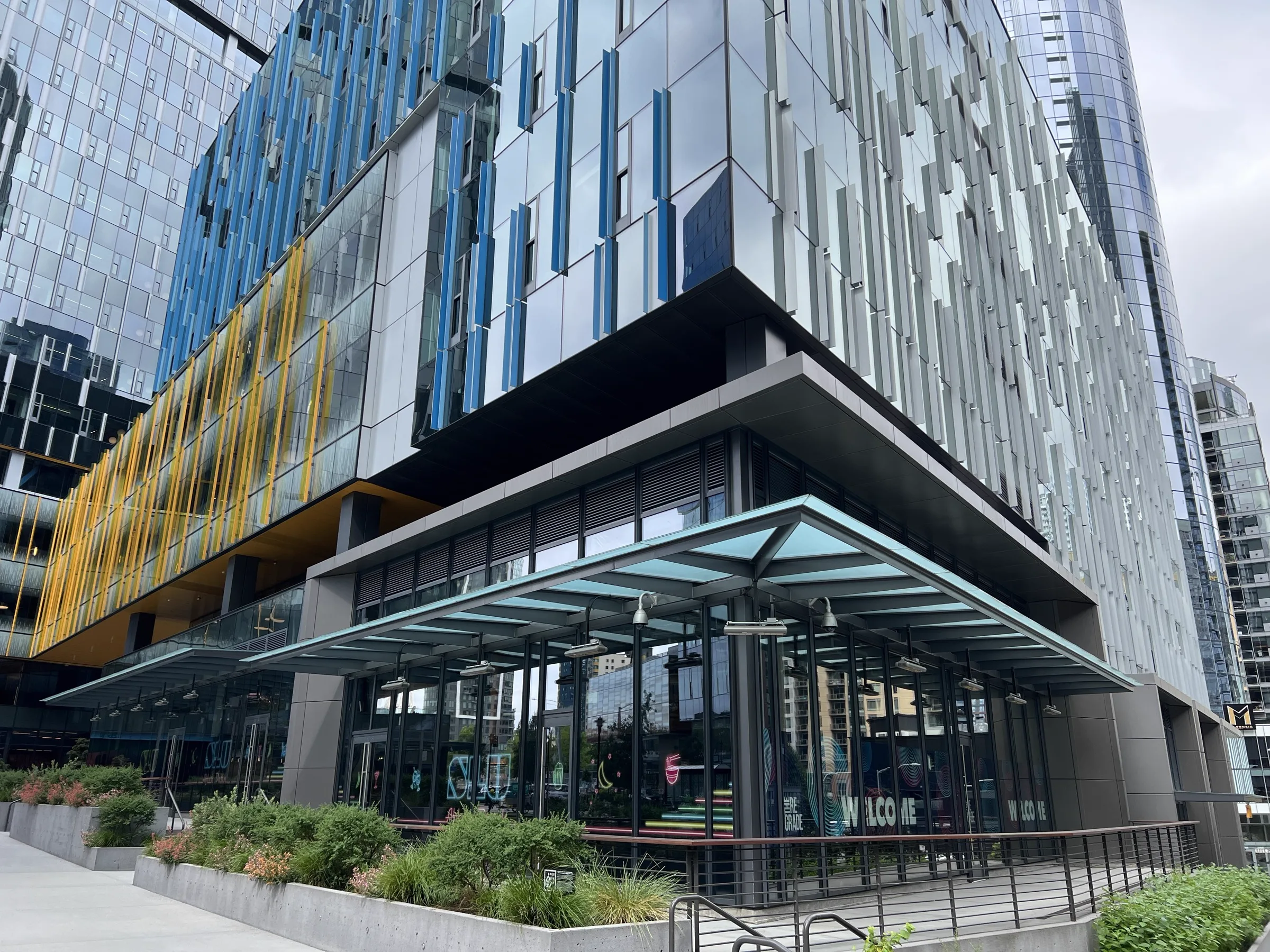
The Elephant Super Car Wash sign — a Seattle landmark since 1956 — sat across the plaza, blinking pink into every window on the block. Inside the studio, a painted version of the same sign hung on the wall. At dusk, both lit up at once.
That was the bet of Ground Floor Studio: put the work at street level, where the city could see it.
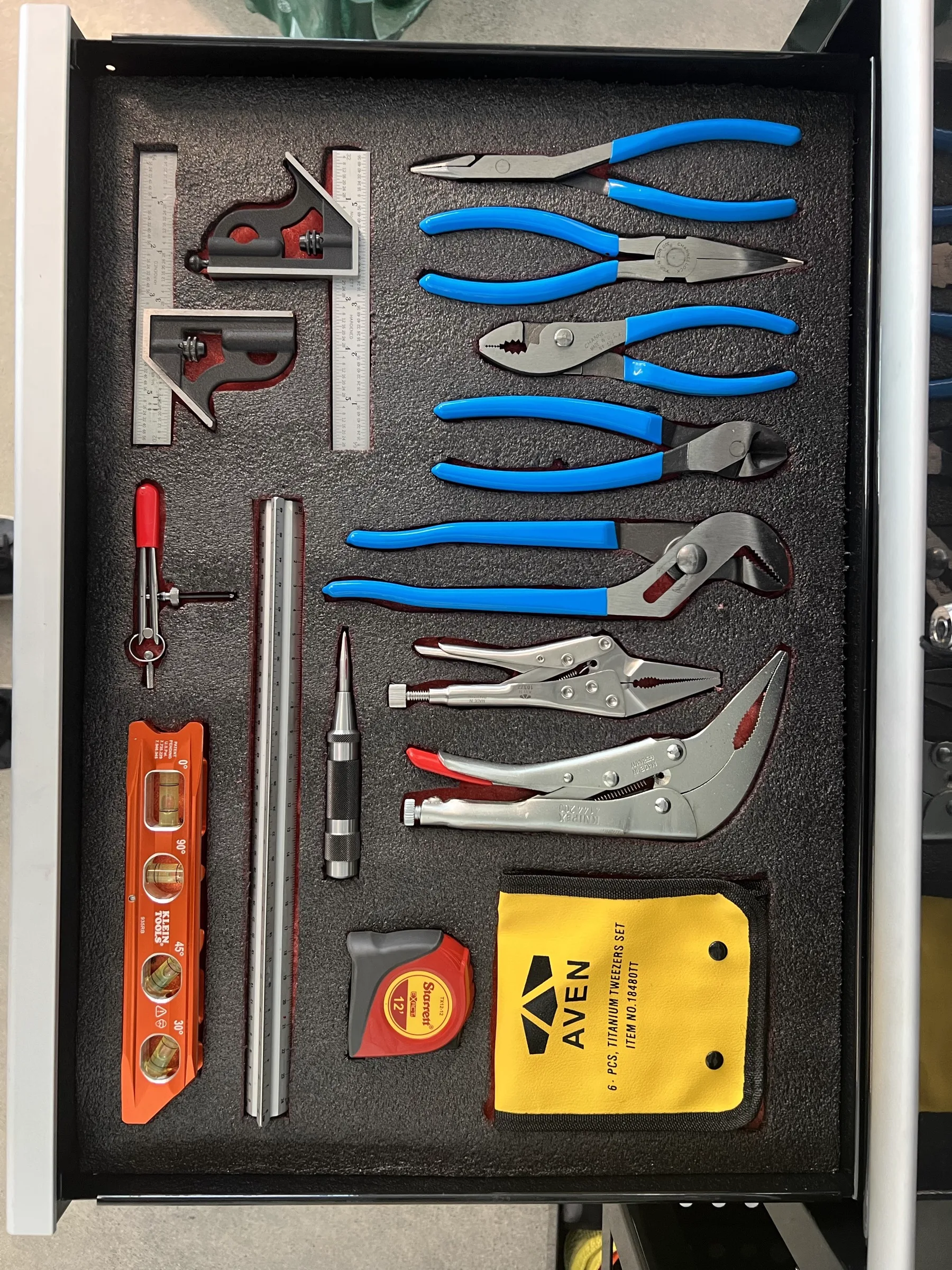
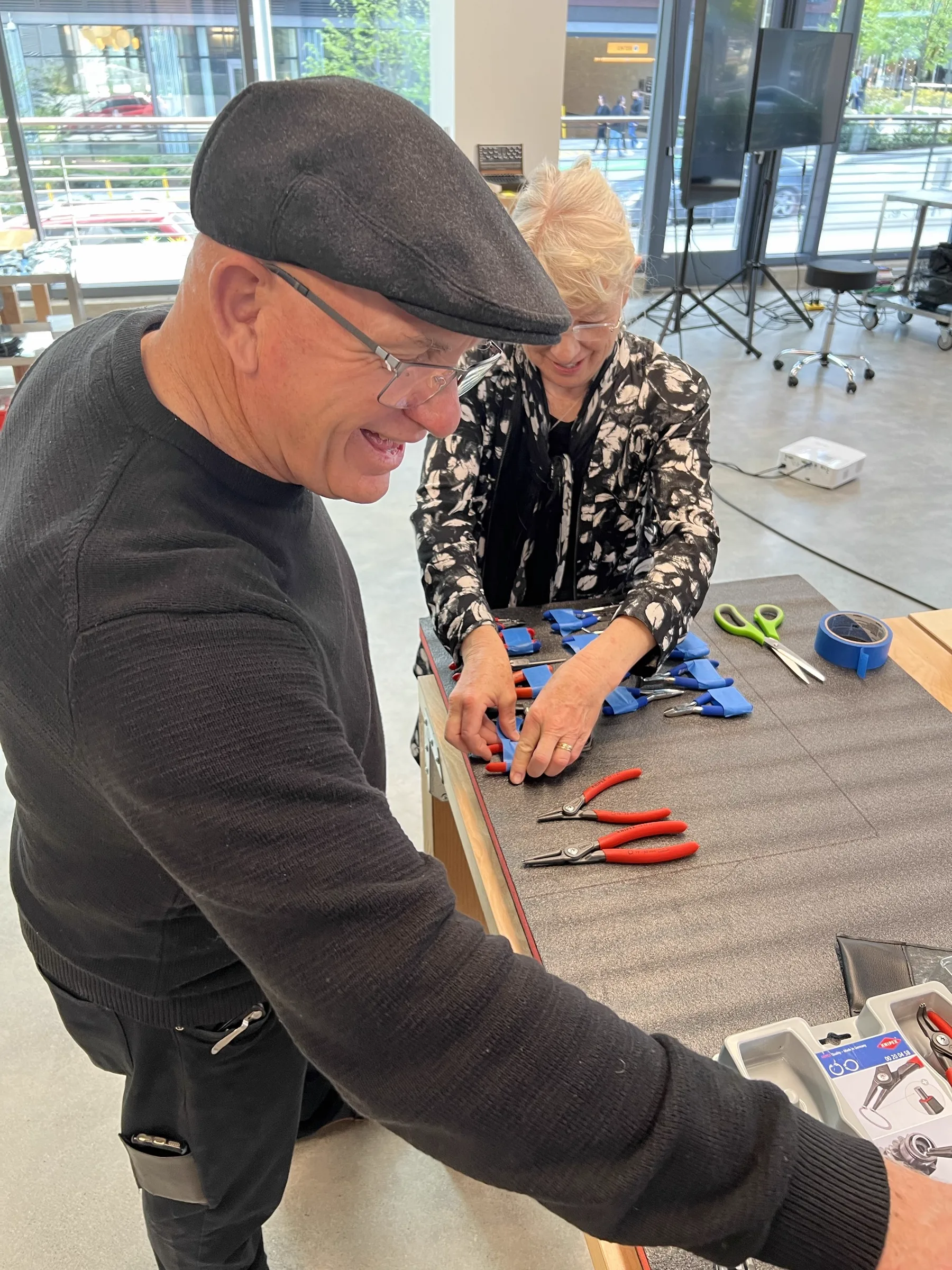
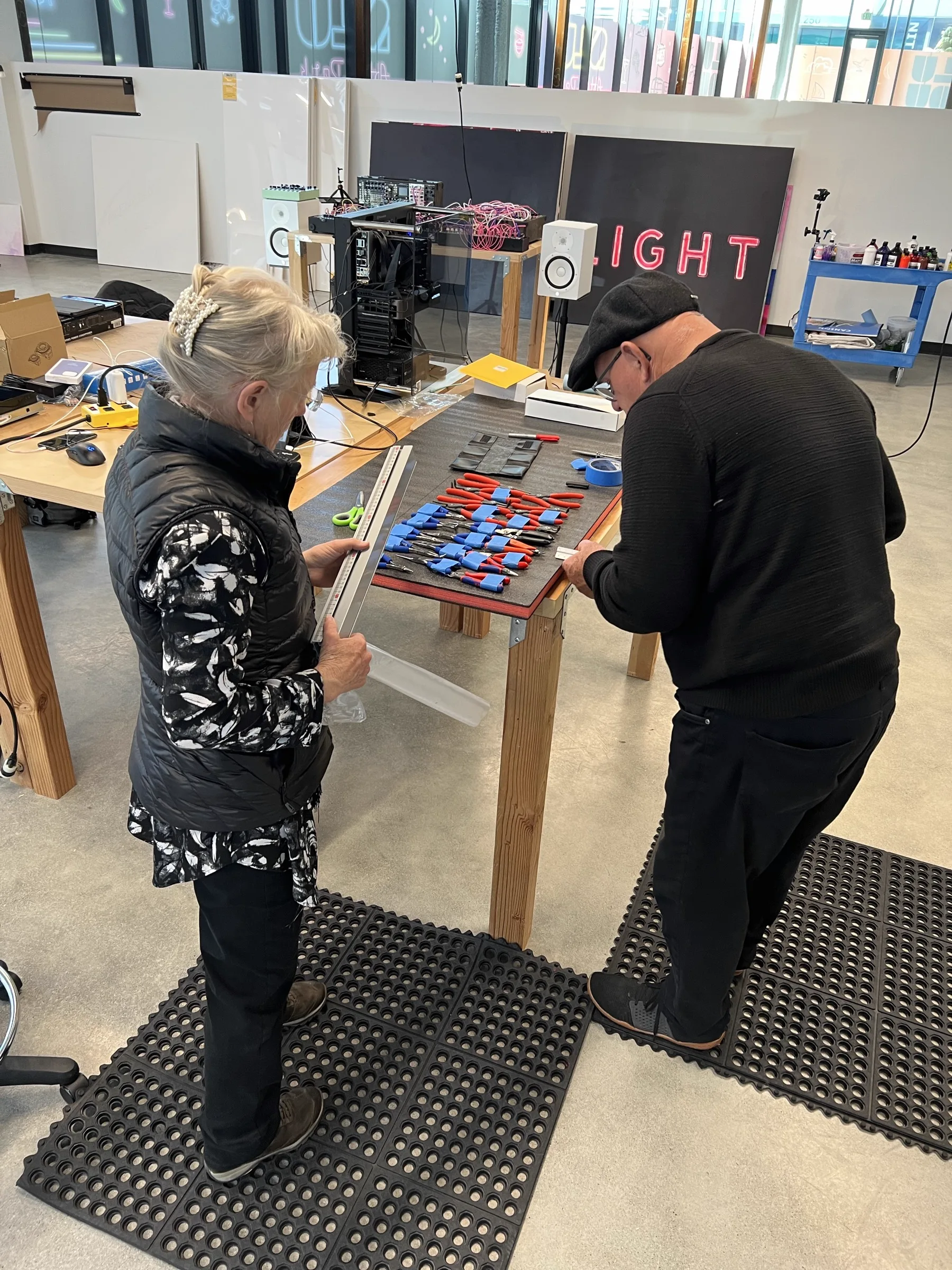
A working studio has a thousand small parts. One weekend in 2023, the artist's parents flew in from out of state and stayed to help find a home for every one of them.
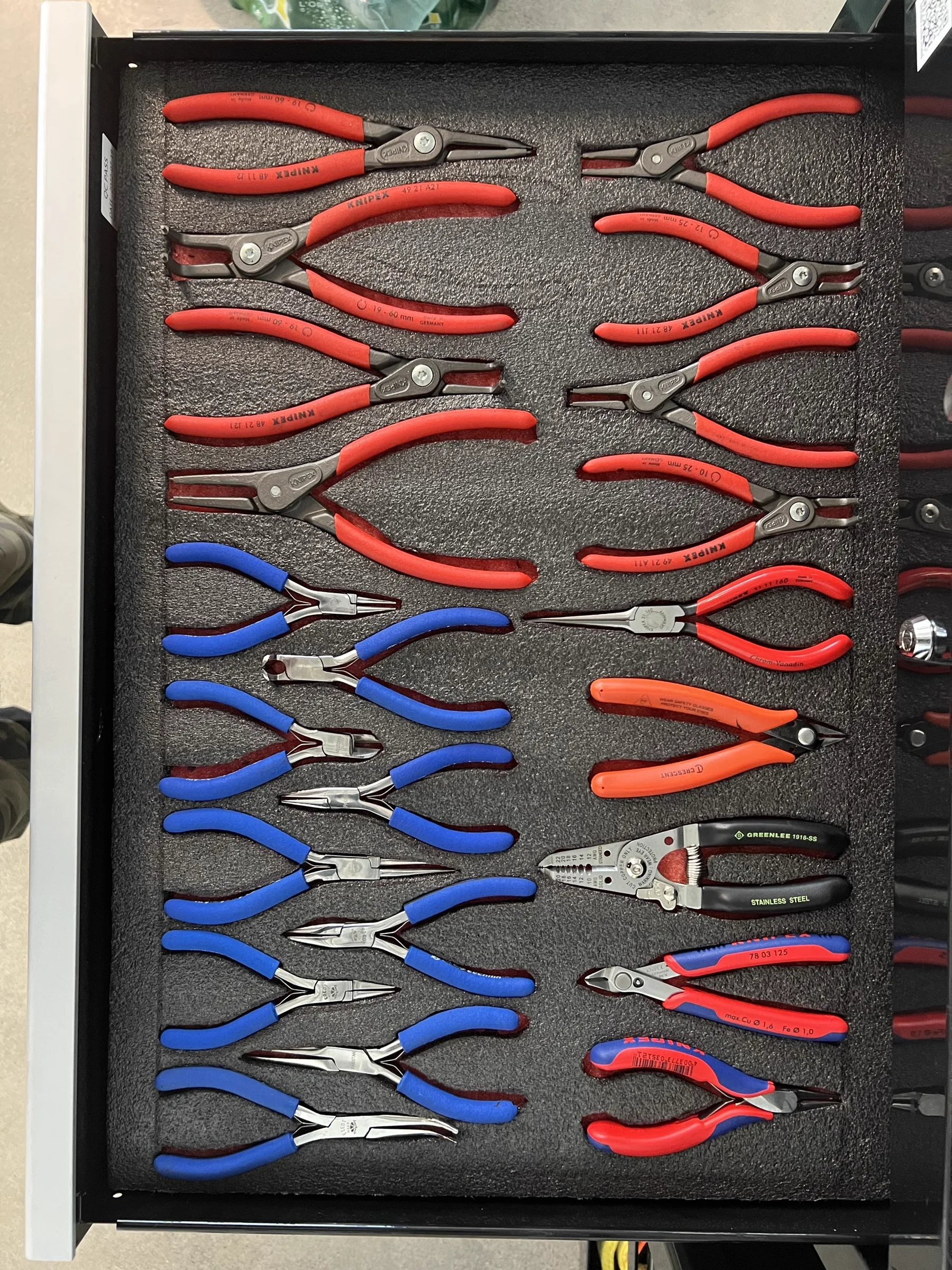
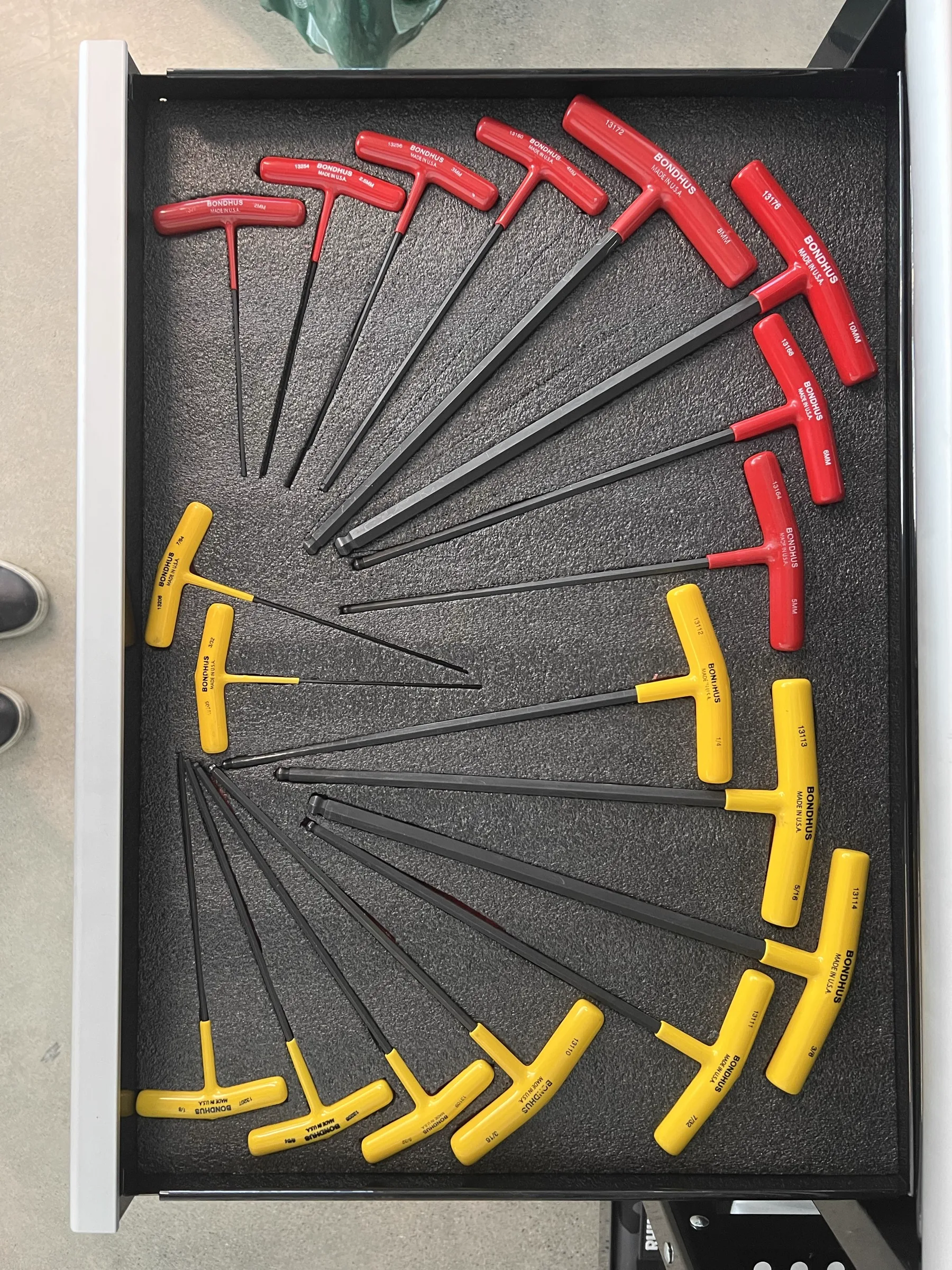
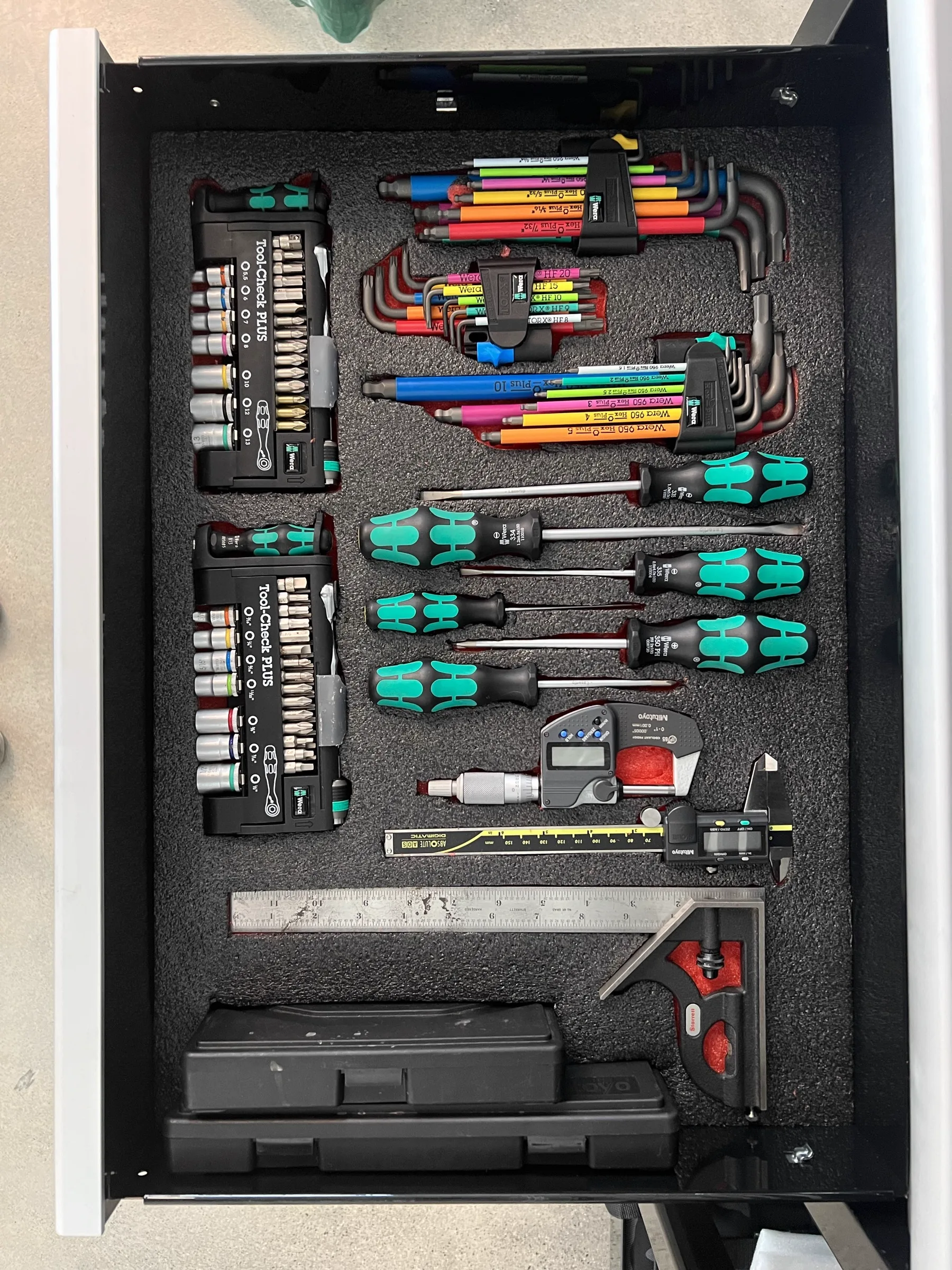
They flew in to see the studio and stayed three days to organize it instead. Every plier, every Allen wrench, every screwdriver out of its bin, laid on the bench, sorted, and set back into foam cut to fit.
The kind of slow, careful work done by the people who taught the artist to want a workshop in the first place.
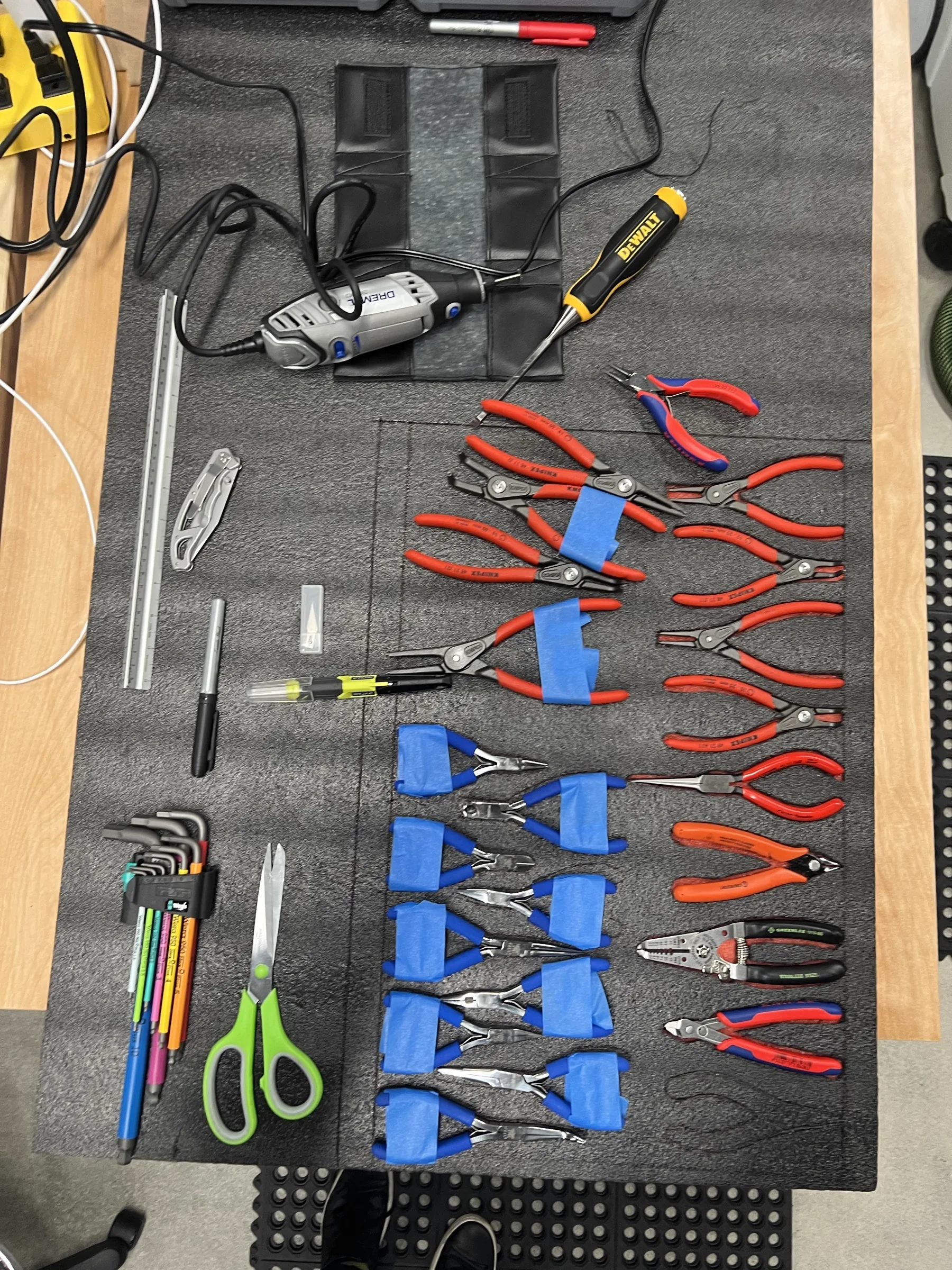
Those drawers stayed that way for the rest of the year. Open one and the contents read like a printed page — every tool exactly where you'd reach for it.
Four short clips. Waldorf at the lamp, Waldorf with the orchids, the mill cutting his own base plate, and the mill itself arriving on the street. Tap for sound.
Ground Floor Studio existed because a small group at Amazon was willing to back a working artist with real square footage and a real budget.
Vice President · Global Real Estate & Facilities · Amazon
For backing the program and trusting that an artist with a CNC mill on a corporate ground floor would turn out to be worth it.
Global Real Estate & Facilities — the project managers, facilities staff and operators who built the place out and kept it running.
Every image from the year. Click any photograph to view full size; use the filters to navigate by chapter.